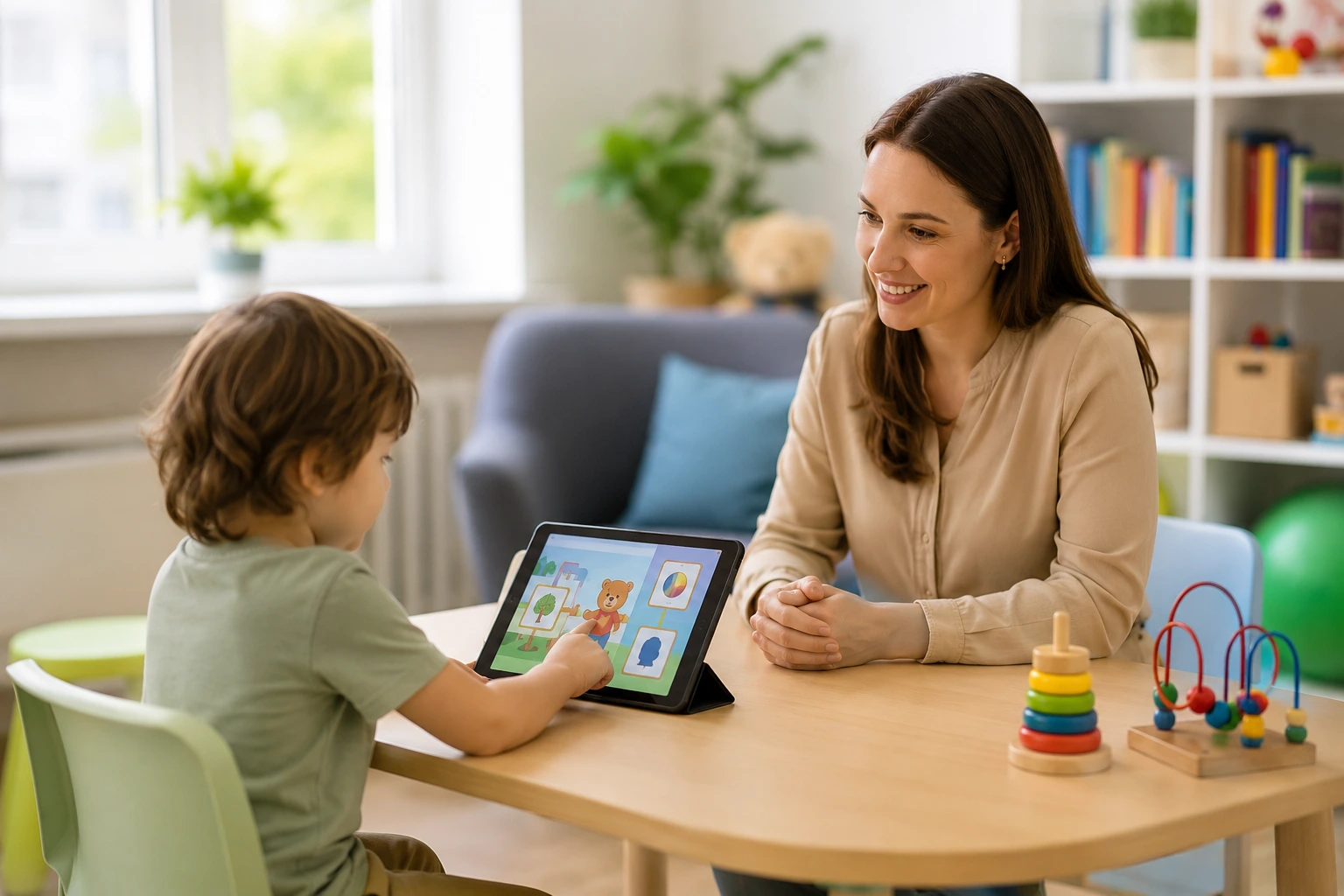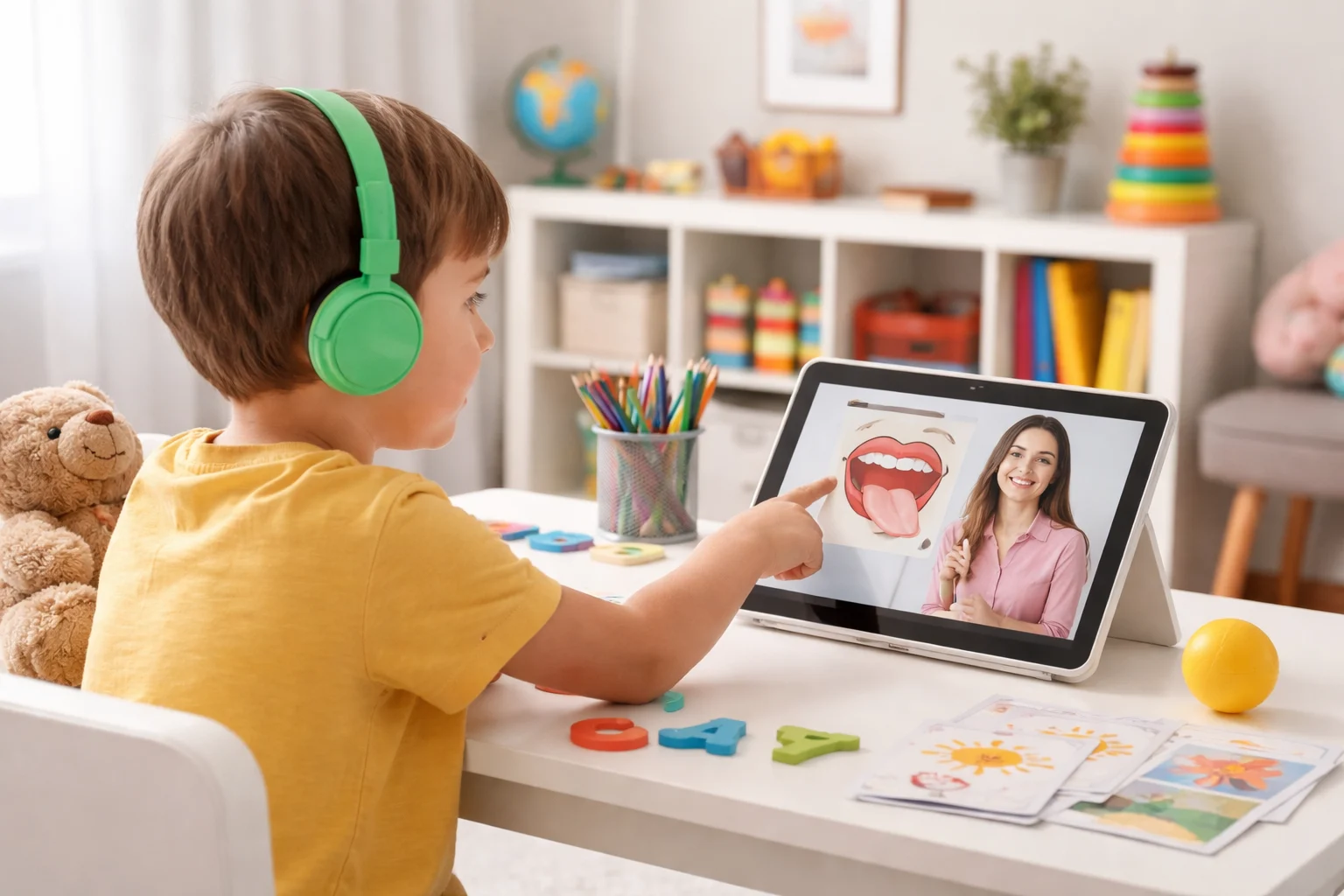
Digital tools are changing speech therapy for children by making practice more accessible, engaging, and consistent between sessions. Apps, games, and online platforms now help kids work on language development at home while staying connected to their speech language pathologists.
If your child struggles to communicate, you already know how stressful it can be. Waitlists for therapy often stretch for months. And when you finally get a spot, sessions might only happen once a week. That leaves a lot of time in between with little guidance on how to help at home.
During those in-between days, technology can step in as a support and work alongside speech therapists rather than replacing them.
In this post, we’ll walk through how digital speech therapy works and why it’s becoming so popular. You’ll also learn which tools are best for different speech goals, so you can figure out what suits your child’s needs.
First, we’ll highlight the features that make it effective.
What Makes Digital Speech Therapy Effective?
Digital speech therapy is effective because it gives kids more chances to practice in a way that feels fun and natural. The best speech therapy technology keeps children engaged while tracking their progress.
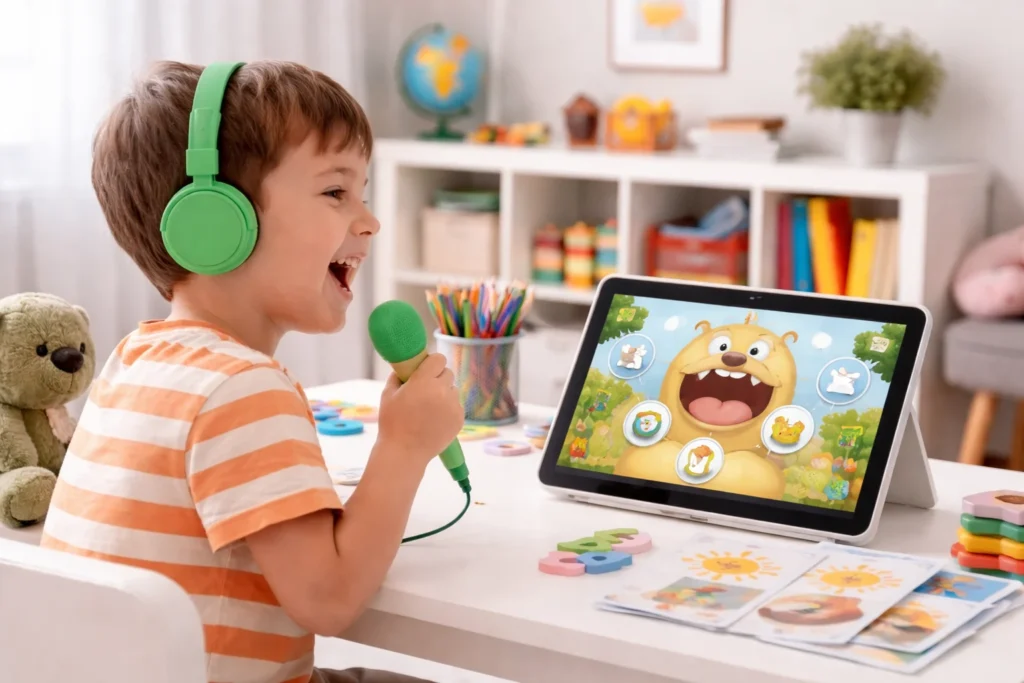
Here are the features that can help.
Core Features of Strong Tools
Strong language therapy apps have a few things in common.
First, they let you set customized speech goals based on your child’s specific needs. For example, if your child is working on the “r” sound, the app can focus only on words and activities that practice that sound.
This way, your child can practice the exact speech sounds or language skills from their therapy sessions instead of generic exercises.
Progress tracking is another feature worth looking for. Good apps will record how your child performs over time. You and your therapist can then see what’s improving and what still needs work. This kind of data also helps speech-language pathologists adjust treatment plans more quickly.
Plus, many tools include audio recordings and playback. This means kids can hear their own voice and learn to self-correct (which can build awareness over time). This skill will carry into everyday conversations and help them correct mistakes on their own.
Designed for Accessibility and Engagement
You’ll notice that the best speech therapy tools are designed with kids in mind. We mean that they use simple, age-appropriate visuals so younger children can stay engaged without feeling overwhelmed.
On top of that, bright colors, friendly characters, and game-like activities make practice fun, which turns learning into something children actually want to do.
Next, accessibility is just as important. Look for apps that work on phones, tablets, and computers. This way, your child can practice wherever they are. Some families also don’t have strong internet at home, which makes offline or low-data options useful for keeping children’s learning consistent without interruption.
Measuring What’s Important
Now, engagement is only important if kids are actually learning. By engagement, we mean short game-like activities, points or sticker rewards, animated prompts, and instant feedback that keep children practicing.
Fortunately, research shows that digital speech therapy helps many children improve their speech and language skills.
A study in the International Journal of Telerehabilitation found that children in teletherapy made progress similar to those in traditional settings. And let’s not forget that it helps children in remote areas access services, which reduces travel and supports their learning and social skills.
Best Speech Therapy Apps and Tools for Realistic Progress
The best speech therapy apps are the ones that match your child’s specific needs. For instance, articulation apps, language therapy tools, and augmentative and alternative communication (AAC) options all do different things. So the goal is to find the right fit for what your child is working on.
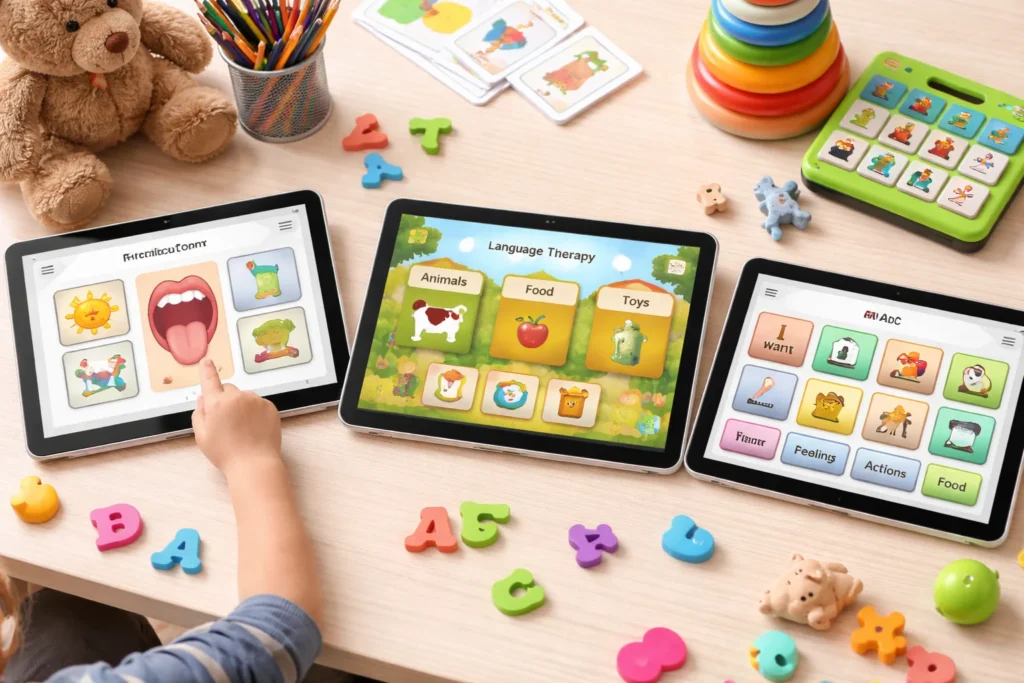
Let’s walk through the main categories.
Match the Tool to the Speech Goal
As we mentioned, not all therapy apps do the same thing. Some focus on speech sounds while others target vocabulary, grammar, or social skills.
You need to pick an app that lines up with what your child’s speech language pathologist is already working on in sessions. Below are the main types you can choose from.
Articulation Apps
Does your child struggle with sounds like “r,” “s,” or “th”? Then, articulation apps can target these specific sounds. For example, Articulation Station guides children through each sound, starting with single words and moving up to full sentences. Many apps also let kids record themselves, so they can hear the difference between their pronunciation and the correct model.
Language Therapy Tools
Building vocabulary and learning to form sentences takes time, but the right app can speed things along. We’ve found that apps with real photos and everyday scenarios tend to stick better than abstract flashcards.
Let’s say you showed your child a photo of a child brushing their teeth or a family cooking dinner. This can help them learn new words like “toothbrush,” “paste,” “stir,” and “pan” and connect these words to real-life activities.
Kids generally connect more easily when they see familiar situations on screen. And that connection helps them remember what they learn.
AAC Tools
AAC tools (or augmentative and alternative communication tools) help children communicate without relying on spoken words. For example, apps like Proloquo2Go let kids tap symbols or pictures to share their thoughts and needs.
Now we understand the worry some parents have that using AAC might stop their child from learning to talk. But research shows the opposite is true, especially for children who get frustrated when trying to communicate. These tools provide them a way to express themselves without frustration, which can help them build the confidence to try speaking more on their own.
Apps for Social Skills
Social skills apps, like ConversationBuilder and The Social Express II, guide children through conversation, emotion labeling, and everyday interactions. These tools are especially helpful for children with autism who benefit from structured instruction around social situations.
If you’re not sure which category fits best, talk with your child’s speech language pathologist. They can help you try a few options before committing.
What to Look For When Choosing a Therapy App
With so many apps out there, we recommend having a checklist. Start by checking the developer credentials. Apps made by licensed speech language pathologists tend to follow sound clinical practices. Articulation Station, for example, was built by a team that includes certified SLPs and parents.
Next, look for speech therapist involvement. As we mentioned earlier, the best apps work alongside professional therapy rather than trying to replace it.
Progress tracking features are another big plus because they help you and your therapist see what’s improving and what still needs attention. Finally, consider flexibility. Apps that let you adjust difficulty levels, customize targets, and export data make it easier to align home practice with your child’s therapy sessions.
Improve Your Child’s Language Development with Speech Therapy Apps
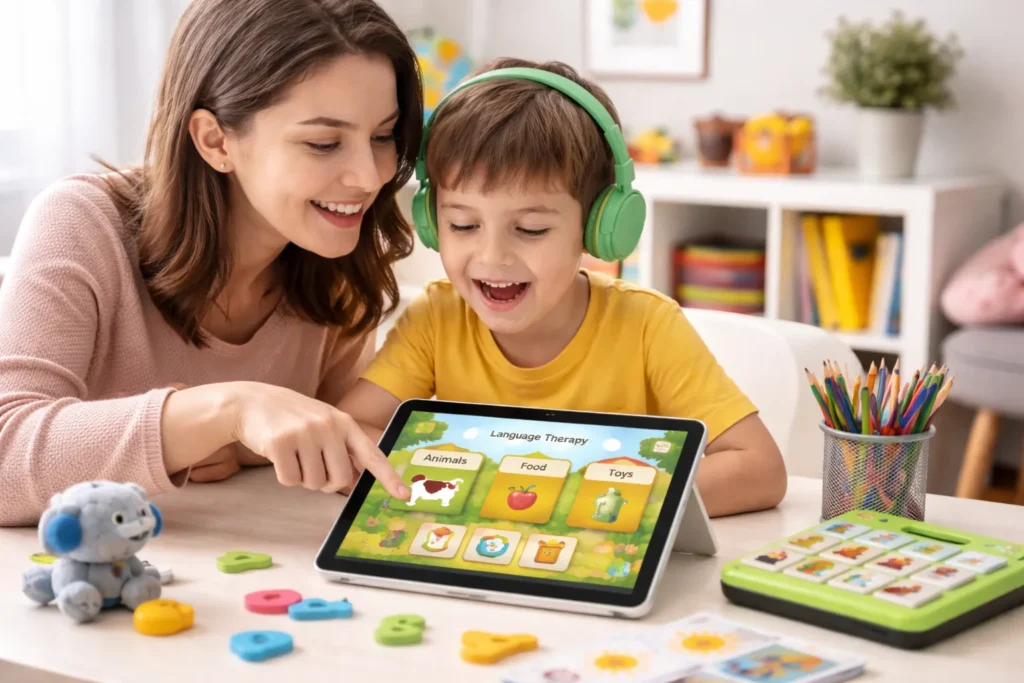
We hope this article gave you a better idea of how digital speech therapy can support your child’s language development.
If used the right way, these tools can make practice more consistent and a lot more fun for your kids. They also give you the flexibility to focus on your child’s specific speech goals at home. That said, these apps are best when they support what your speech language pathologist is already doing.
So, we recommend asking your child’s therapist which tools fit into their current plan. From there, you can start with one app, use it for a few weeks, and see how your child responds. Remember, you can always adjust as you go.
If you’re not sure where to begin, Smarty Ears offers a range of interactive speech therapy apps designed for young children.