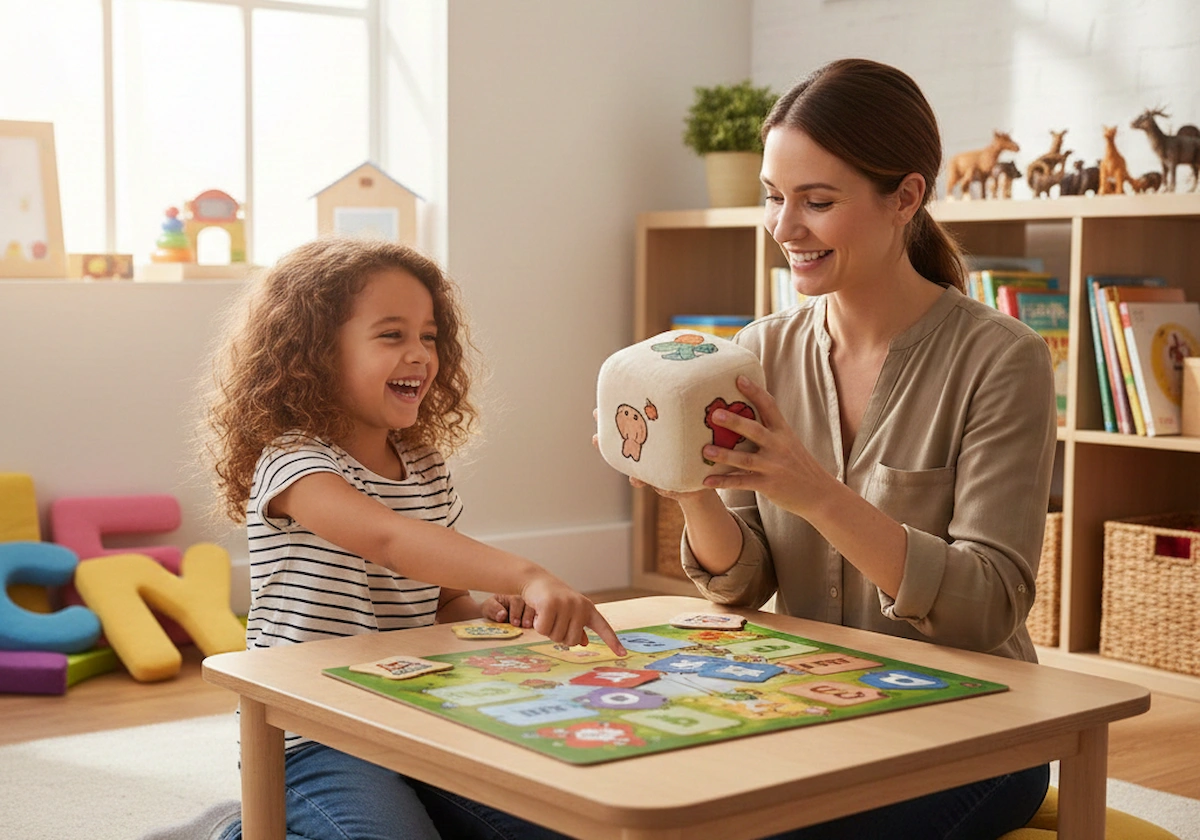
Games improve engagement in speech therapy sessions by making repetitive practice feel like play, which keeps children motivated and willing to participate longer. When therapy feels fun instead of like work, kids naturally produce more trials and stay focused throughout the session.
However, getting a child to practice speech therapy can sometimes feel impossible. You plan activities, gather materials, and within five minutes, your child loses interest or refuses to cooperate. We know how exhausting those challenges become when you’re trying to help your child make progress with their communication skills.
Our team at Smarty Ears has worked for over a decade with speech therapy games that actually keep kids engaged during sessions.
In this article, we’ll show you which games get the best results, how to use them at different ages, and practical ways to target specific sounds while keeping the learning process enjoyable.
Read on to learn which games keep kids engaged from start to finish.
What Are Speech Therapy Games and Why Kids Love Them
Speech therapy games are structured activities that make practicing speech sounds, vocabulary, and language feel like play instead of work. These fun speech therapy activities give children natural reasons to communicate while they’re focused on winning, taking turns, or completing challenges.
The games create countless chances for repetition and conversation without kids realizing they’re in therapy. Children stay motivated much longer when learning feels enjoyable. That means they practice target sounds more often without complaining or trying to avoid sessions.
Plus, therapy games build understanding through active participation rather than sitting still and following instructions. Games also provide natural opportunities for communication skills and language development that boring drills simply don’t provide in any form.
Pop-Up Games: The Secret to Getting 100 Repetitions Per Session
Pop-up style interactive games build suspense with every single turn, which keeps clients completely focused on what happens next. Each push, poke, or pull creates another chance to practice target words.
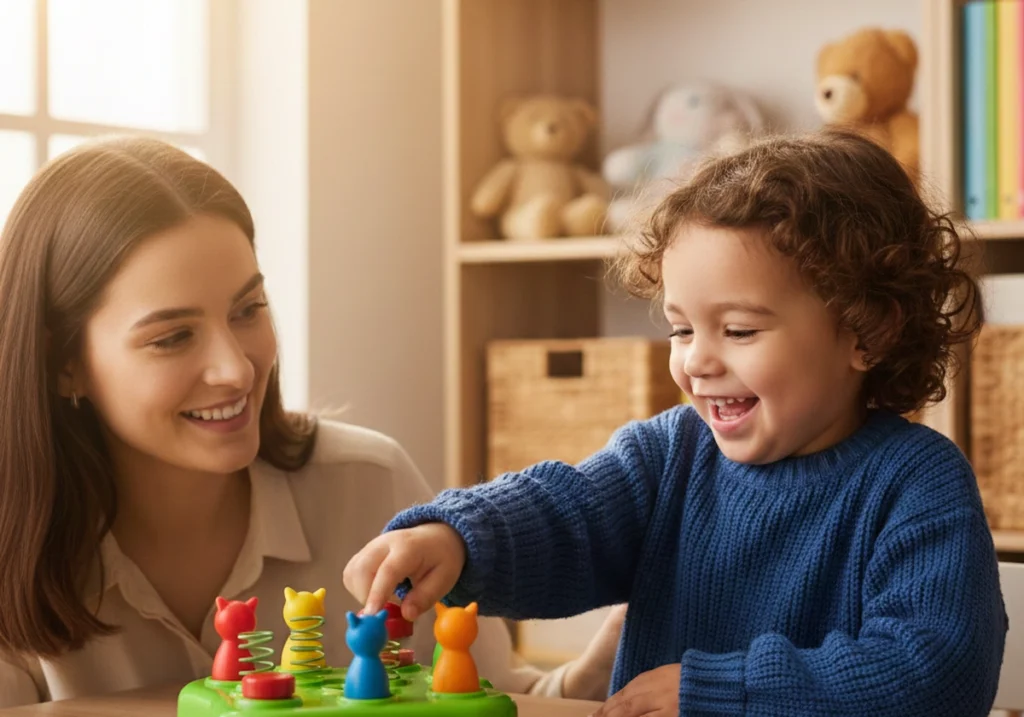
For example, Pop the Pig requires children to press the pig’s head over and over, giving them a whole lot of opportunities to work on specific sounds each round. Greedy Granny and Shark Bite work the same way.
The surprise element in these games triggers genuine reactions and natural language that helps kids generalize skills beyond structured speech therapy sessions. We’ve seen children who barely speak during traditional drills suddenly shout complete sentences when the unexpected happens in these games.
While pop-up games deliver high client engagement without feeling like work, quick turn-taking games offer a different kind of solution for busy sessions.
Games That Keep Kids Asking “Can We Play Again?”
Want to know the best part? Quick-turn-taking board games keep momentum going strong, so kids stay focused from the first turn to the last. These effective strategies save time because easy rules mean less explaining and more actual practice.
Here are a few fast-paced favorites that work especially well in speech therapy sessions:
- Don’t Spill the Beans: The game board stays interesting throughout because one wrong move changes everything, keeping engaged clients alert without constant stops and starts. It combines careful placement with speech practice in a way that feels natural.
- Sneaky Snacky Squirrel: This is a game that uses an adorable squirrel tong children absolutely love. Kids become eager to practice communication skills just to use that tool and collect acorns for their log.
- Connect Four and Jenga: These two require fast turns that maintain focus, preventing children from getting distracted during speech therapy. Each move takes seconds, which stops kids from losing interest between their turns.
So those are games built for speed and repetition, but what about matching activities to your child’s actual age?
Board Games for Language Development: What Works at Every Age
Board games support language development differently depending on your child’s age, from simple turn-taking for preschoolers to complex social skills for teenagers.
The thing is, the right game at age three won’t work the same way at age thirteen. That’s because speech and language skills grow in stages, and what engages a young child will bore an older student completely.
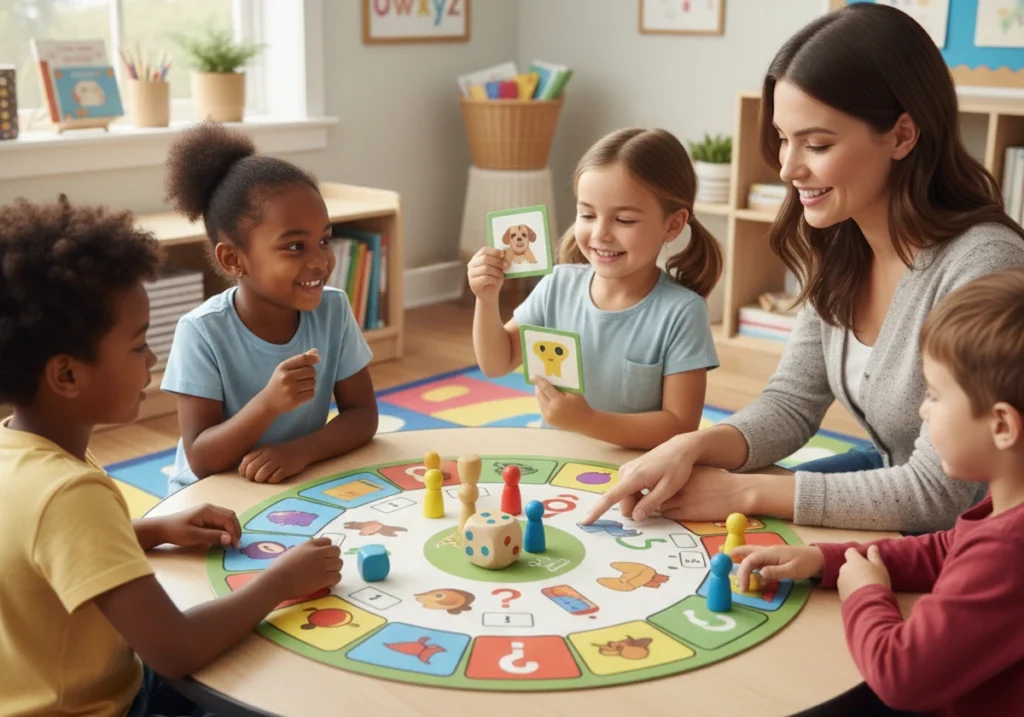
Different games work better at each stage of childhood:
Games for Preschoolers (3-5 Years)
Preschool games work best when they combine movement with speech practice, keeping little bodies busy while young minds learn new sounds.
Hopscotch Word Fun combines physical movement with speech practice, which helps active preschoolers burn energy while working on target sounds. If your child needs extra support, colorful chalk drawings make each box more interesting and help with spatial concepts. These simple additions keep children focused on the game.
The reality is, speech therapy students at this age need games that let them move around rather than sit still for long periods. So when they play I Spy, it teaches turn-taking and sentence building as children describe objects they see and guess what others are thinking about.
Interactive Games for School-Age Kids (5-10 Years)
When you take a game kids already know and add speech therapy goals to it, they practice without realizing the work involved. Some options include:
- Go Fish Customization: You can customize cards with target speech sounds using online games or printed materials, so children practice specific sounds while playing a game they recognize straight away. Speech therapy becomes invisible when the activity feels this familiar.
- Zingo Vocabulary: This classic game works like bingo but with words, helping kids match vocabulary while building sentences with the words they find on their cards. Early readers especially love the fast-paced matching that keeps everyone alert.
- Shopping List Conversations: Sometimes a simple shopping-themed board game is all you need. It builds food vocabulary and encourages children to share opinions using wh-questions like “Do you like carrots?” Follow the direction cards, and add another layer that strengthens listening and comprehension while keeping the game moving.
All these games give school-age kids the structure they need without taking away the fun.
Role Play and Social Communication for Teens
Role play scenarios are the fastest way to help teens practice conversations they’ll actually use in real life outside therapy sessions. These activities target skills older students genuinely need:
- Restaurant Ordering: We’ve found through hands-on work that practicing with menus and questions prepares teenagers better than any worksheet ever could. When they rehearse ordering food or asking about ingredients, they build confidence for real social situations.
- Job Interview Practice: Teens learn to read facial expressions and respond to open-ended questions during mock interviews. With practice, they develop the articulation and conversational skills employers actually look for.
- Apples to Apples: The card game naturally encourages social communication as players explain their choices and debate which answer fits best. This teaches abstract thinking and opinion expression in ways that feel completely natural.
Together, these activities help teens build the social language skills they need to navigate real conversations with confidence and ease.
What Happens When Therapy Feels Like Playtime
When therapy feels like playtime, kids produce more practice trials, show up eagerly to sessions, and remember their new skills long after the game ends.
In our experience with hundreds of speech sessions, children generate significantly more speech attempts during game-based activities compared to traditional drills. This increase in practice directly speeds up progress toward language goals.
Children start looking forward to therapy sessions, which makes them more willing to show up and practice skills at home between visits. And honestly, building a strong therapeutic alliance becomes easier when clients associate you with fun rather than frustration.
Parents notice better carryover, too, because games create memorable contexts that help children remember how to use new sounds correctly. The therapeutic alliance strengthens naturally when kids build trust through positive and successful outcomes in every session.
How to Target Articulation Goals Without Losing the Fun Factor
Start by picking games that already include your target sounds in the natural gameplay, then let kids practice without constant reminders. This therapeutic strategy keeps the treatment process feeling relaxed instead of forced.

For instance, choose games where kids naturally say target words during gameplay, like saying color names in Candy Land for initial sound practice. The fun game structure keeps children engaged while they work on articulation goals without even realizing it.
What’s more, create custom game cards with target words that match your treatment goals, then slip them into familiar games children already enjoy. You can adapt physical board games or speech therapy apps to focus on the target articulation sounds your student needs most.
Worth Noting: Keep an eye on the balance between practice and play, because too much correction kills the mood quickly.
Start Playing: Your Next Speech Session Just Got Easier
You don’t need a closet full of expensive games or hours of prep time to transform how engaged your students become during speech therapy sessions. Start with one or two simple speech therapy games you already own, then notice how much more motivated children become during sessions. The important step is simply beginning with what feels comfortable to you.
Match games to your students’ interests and energy levels. Some kids love fast-paced board games while others prefer calmer activities. Pay attention to what makes each child light up, then use those games more often in your speech sessions.
For more resources and tools to support your practice, visit Smarty Ears. You’ll find everything you need to create therapy sessions that kids actually look forward to attending.