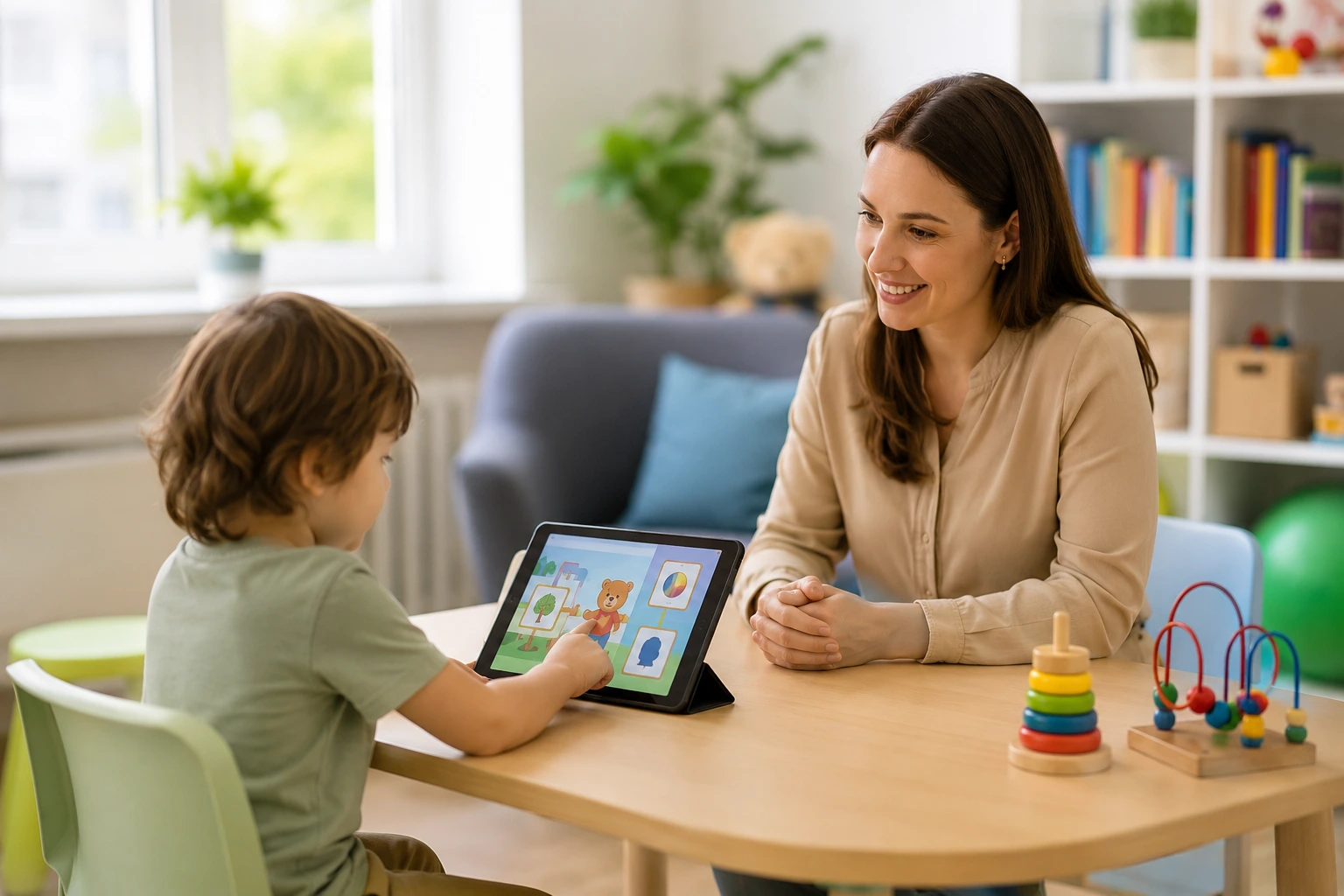
If you’ve been wondering how to help your kids practice speech between appointments, you’re in the right place. Many parents feel messed up about what to do outside the clinic, and that’s completely normal.
When your speech therapist sees your child once or twice a week, those sessions plant the seeds. But the real language growth happens during everyday moments at home when you support your child’s communication.
That’s why this article will teach you simple ways to support your kids’ language development through daily activities. We’ll also cover practical speech therapy exercises, what your therapist wants you to know, and how to build your child’s speaking confidence at home.
Let’s get started.
Why Speech Therapy at Home Is Important Between Sessions
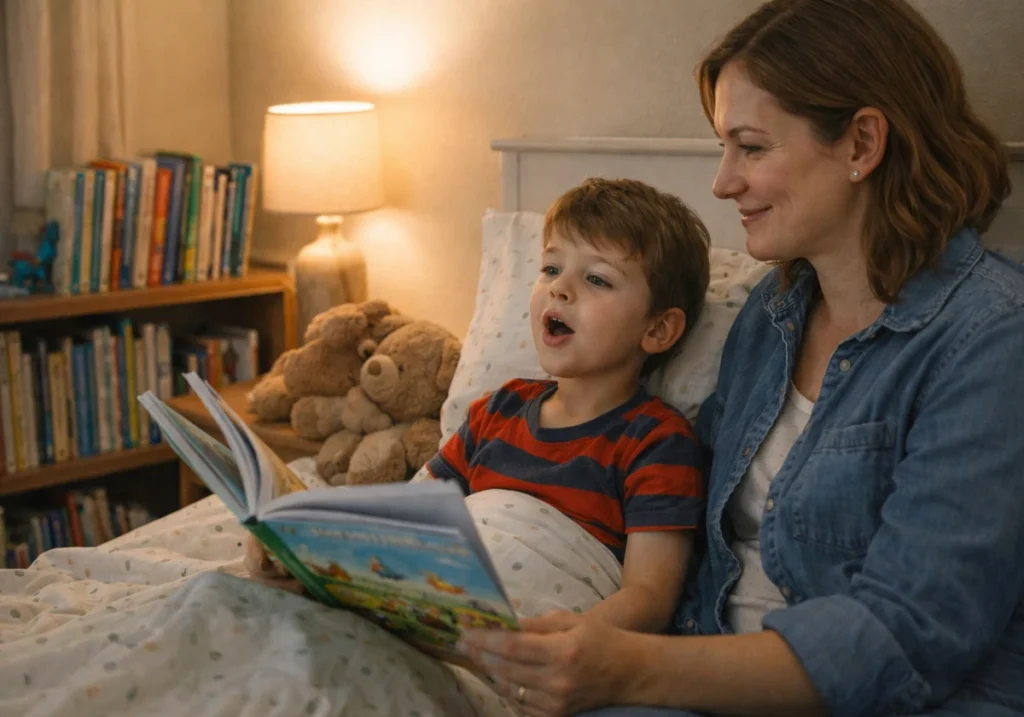
Speech therapy at home bridges the gap between professional appointments and gives children the repetition they need to lock in new speech patterns.
Although your speech therapist provides expert guidance during sessions, kids need daily opportunities to practice what they’re learning.
Here’s what happens when you support language development at home:
Children Learn Through Daily Practice
Kids need repetition outside therapy rooms to strengthen new speech patterns and make them stick in the long term.
When your child practices sounds and words multiple times throughout the day, those neural pathways get stronger. You can think of it like learning to ride a bike, where one lesson per week won’t cut it.
Meanwhile, home practice reinforces what the speech therapist teaches during weekly or monthly professional sessions. Your therapist might work on the “R” sound for 30 minutes, but your child needs dozens more attempts before it becomes automatic. That’s why each mealtime conversation, each bedtime story, and each playtime chat adds up to real progress.
Daily activities also offer natural chances to practice sounds, words, and language skills in a relaxed way. For instance, asking for apple juice at snack time teaches communication without the pressure of a formal therapy setting.
Language Development Happens in Real Moments
Grocery shopping, cooking dinner, andbedtime stories create perfect opportunities for spontaneous language learning. These everyday interactions let children learn language in context, where words have actual meaning and purpose.
Real-world conversations also help children to apply speech therapy exercises to actual communication situations they face daily. It means when your child asks, “Can I play outside?” they’re using language skills in a way reading flashcards never could. This approach teaches them how conversation works.
Beyond these, natural settings reduce performance anxiety and let kids practice speech and language skills more comfortably than in clinics. As a result, children communicate more freely when they’re not sitting across from a therapist with a clipboard.
Support Language Development Without Formal Training
Parents don’t need special certifications to help their child practice between speech therapist appointments. You already know your child better than anyone else, and easy techniques work just as well as complicated methods.
Generally, simple techniques like narrating activities and asking open-ended questions increase language skills without formal methods. In practice, when you describe to your kid what you’re doing while making lunch, you’re teaching vocabulary and sentence structure naturally.
Consistent encouragement at home creates another supportive environment where children feel safe trying new sounds. In this environment, your child learns that it’s okay to make mistakes while practicing speech.
Easy Speech Therapy Exercises You Can Start Today
The best part about these exercises is that they fit naturally into activities you’re already doing every single day. On top of that, you don’t need special equipment or a dedicated practice space to help your child improve their speech.
Let’s have a look at how the following strategies work for your children:
Positive Reinforcement During Everyday Activities
You should always celebrate small wins when your child attempts difficult sounds, even if they don’t get it perfect yet. For instance, if your kid tries saying “juice” but it comes out as “duce,” praise the effort before gently modeling the correct sound. This encouragement keeps them willing to try again.
Sometimes, use specific praise like “I love how you said that R sound” instead of generic “good job.” That’s because kids need to know exactly what they did right so they can repeat it.
You can also reward their efforts with high-fives, stickers, or extra playtime to keep motivation high during practice. The goal here is to make speech practice something your child looks forward to, not something they dread.
Turn Playtime Into Language Skills Practice
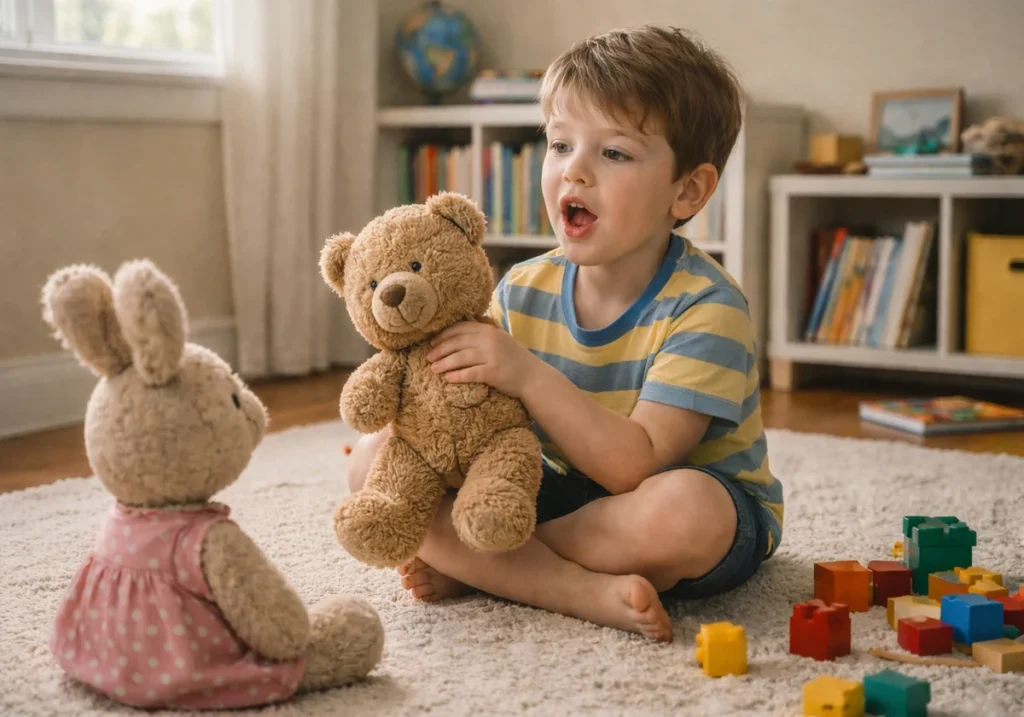
Pretend play with dolls, action figures, or toy animals encourages kids to use new vocabulary naturally. When your child makes their stuffed bear “talk,” they’re practicing speech without realizing it. This play helps them to build language skills while keeping things fun.
Besides, board games and card games require turn-taking, following directions, and using descriptive language while you play together. Specifically, games like “I Spy” or simple matching games give children chances to practice specific sounds, mirroring real-world communication.
Building blocks or puzzles let kids practice position words like “under,” “next to,” and “between.” So, when you ask, “Can you put the red block on top?” your kid is learning vocabulary and spatial language. These activities help kids learn to communicate about what they see and do.
What Your Speech Therapist Wants You to Know
Your speech therapist wants you to know that consistency at home beats perfection, and open communication helps them adjust strategies.
We understand how overwhelming it feels when you’re trying to support your child’s speech development between appointments. Yet, with the therapist’s guidance, you can follow the approaches below:
- Follow Professional Guidance: Stick with the specific speech therapy exercises your therapist recommends rather than trying random techniques from the internet. Speech language pathologists design these strategies based on your child’s age and specific needs. That’s why what works for one child struggling with “S” sounds might not help another with trouble forming sentences.
- Consistency Over Perfection: Practice a little bit every day instead of occasional marathon sessions on weekends. Later, your therapist can adjust their approach if something isn’t working, so talk openly about what happens at home. This communication helps them to understand how your child responds outside the clinic.
- Track Progress Simply: Keep simple notes about which sounds your children are mastering and which still need work. Plus, don’t correct every single mistake during conversations. Otherwise, you’ll frustrate your child and discourage natural talking. Just listen and respond to what they’re trying to communicate first, then gently model the correct words.
- Professional Sessions Matter: Speech therapy sessions provide expert assessment and techniques you can’t replicate without training. Remember, home practice supports therapy but doesn’t replace it. Both work together for faster speech progress. Honestly, your speech therapist sees patterns and developmental milestones in language skills you might miss without specialized experience.
That’s how, when parents and therapists work as a team, children feel supported and make stronger gains in their communication abilities. The trick here is just staying consistent with practice while keeping conversations relaxed and pressure-free.
Building Public Speaking Skills Early: Tips That Work for Kids
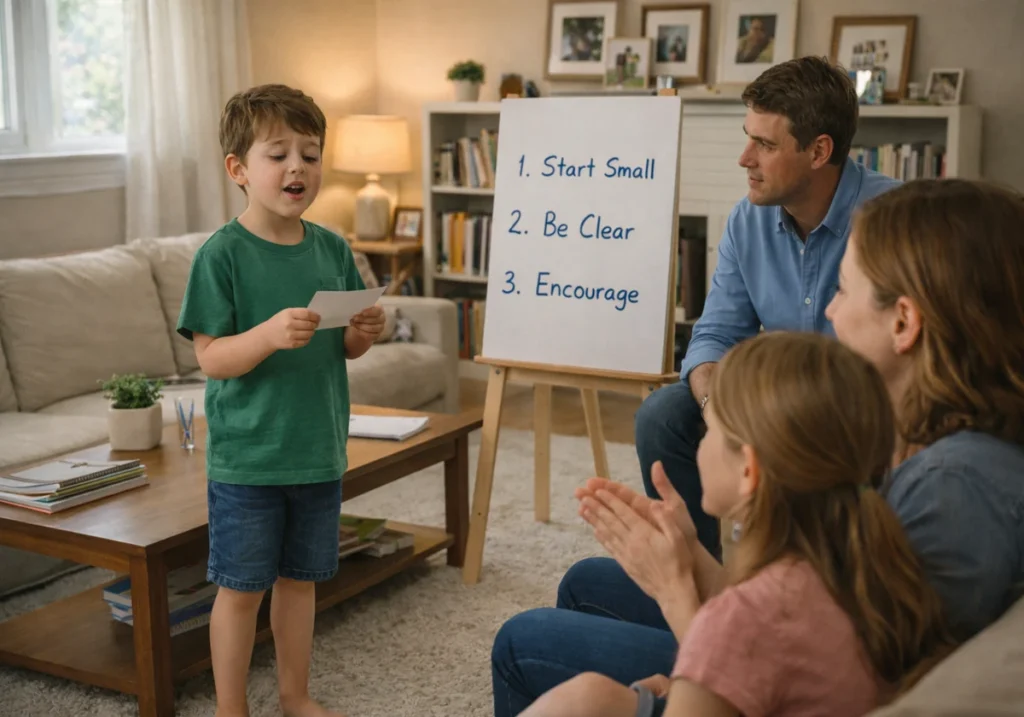
Want to give your child confidence beyond childhood? Well, you can let them try public speaking. These skills don’t just help with school presentations. Instead, they build communication abilities that children will use for the rest of their lives.
We’re suggesting a few tips so you can move forward with public speaking for your kids today:
- Tip 1 – Start at Home: Public speaking confidence begins when children practice talking in front of family members regularly. That’s why encourage your child to share stories about their day at dinner or explain their favorite game rules. Also, model good speaking habits yourself by making eye contact during conversations and using your voice to keep people interested.
- Tip 2 – Begin Small: Start with one-on-one conversations before expecting your child to speak confidently in group settings. Let kids “present” their artwork or school projects to family members for low-stakes practice. Sometimes, public speaking tips like taking deep breaths and using short sentences help anxious children manage nervousness better.
- Tip 3 – Focus on Clarity: Break longer talks into clear main points so the audience’s attention doesn’t wander. To achieve it, you can teach nonverbal communication through gestures and eye contact. This way, when you focus on the central idea, kids learn to communicate with a specific purpose.
- Tip 4 – Encourage Over Correct: Positive reinforcement builds confidence faster than criticism. Which is why praise specific things like “you spoke so clearly” instead of vague compliments. Adults often forget how scary it feels to talk in front of others. That’s why you should encourage rather than correcting.
Bottom line: These early public speaking habits give kids tools they’ll use in school conversations and beyond. Besides, the confidence they build at home carries into every situation where they need to speak up.
Keep the Momentum Going at Home
Speech therapy at home doesn’t have to feel complicated or overwhelming. When you weave practice into everyday moments, your children make steady progress without the pressure of formal sessions. That’s because each conversation, each game, and each mealtime gives kids chances to strengthen their language skills naturally.
The support you provide between speech therapy appointments makes a real difference in how quickly your child builds new skills and confidence. Remember, you don’t need to be perfect. Consistency and encouragement beat perfection every single time.
Ready to explore more ways to support your child’s speech and language development? Visit Smarty Ears for helpful resources, apps, and tools designed specifically for parents working on communication skills at home.