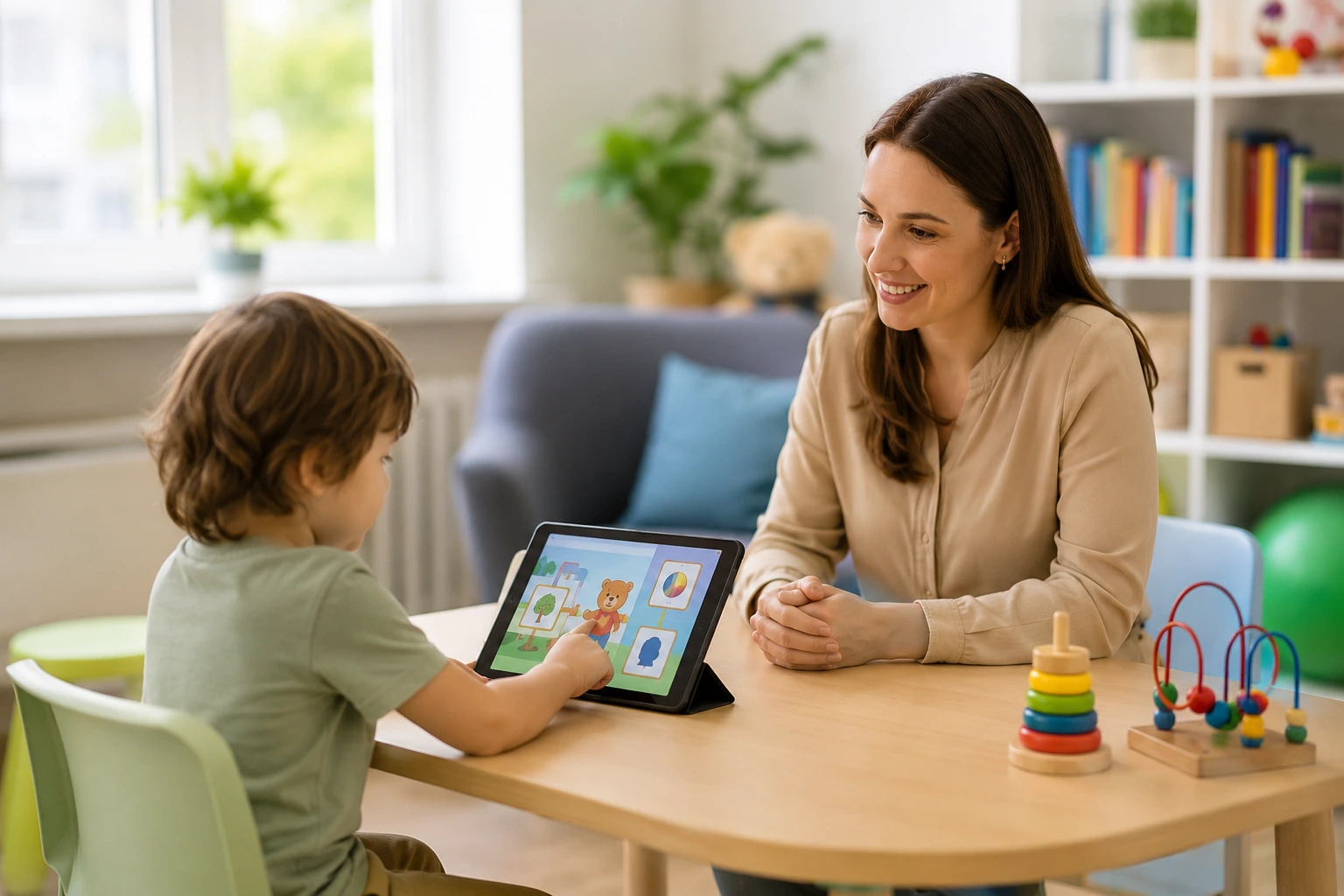
A speech therapy platform connects therapists, teachers, and families by keeping sessions, practice, and progress in one shared place. Everyone reads the same goals, so nobody works from a note that’s two months old.
Many school teams still pass around paper folders, emails, and voicemails that get lost by the next meeting. Smarty Ears offers speech therapy resources that help therapists, teachers, and families support children’s communication development.
Online speech therapy now covers live sessions, classroom follow-up, and home practice. Each part works better when every adult sees the same treatment plan.

According to the 2023–2024 National Survey of Children’s Health, 6.8% of U.S. children aged 3–17 had a current speech or language disorder. Many families see their child’s speech therapist for one 30-minute session a week, yet these disorders don’t pause between visits. A speech therapy platform helps families continue the same practice at home, using goals set during therapy sessions.
Virtual sessions and interactive therapy tools support different parts of that process. Here’s how each helps children practice and make progress.
What Speech-Language Pathologists Can Do in a Virtual Session
Virtual sessions still cover screening, assessment, treatment, and family coaching. The ASHA practice portal on telepractice defines telepractice as using telecommunications technology to deliver speech-language pathology and audiology services at a distance. It links speech-language pathologists (SLPs) with clients, care partners, and other professionals. ASHA treats telepractice as a valid service delivery model when its quality matches in-person care.
A virtual speech therapy session runs much like a visit to the therapy room. The SLP shares a screen, runs the activity, and watches the child’s mouth up close on video (closer than most classroom seats allow).
Because speech therapy online works from anywhere, an SLP can invite a parent in for the last five minutes to review homework. Online therapy also protects the schedule during weeks when in-person visits fall through. A snow day, a field trip, or a sick sibling at home no longer has to cancel the session.
Speech Therapy Tools That Keep Teletherapy Sessions Engaging
Well-designed teletherapy tools hold a child’s attention because practice feels like play. Drag-and-drop speech therapy games, flashcards, and picture decks give kids a goal for every repetition, so each attempt has a purpose.
Many of these apps also collect data while the child plays. The SLP taps to mark each attempt correct or incorrect. The app then builds the score sheet (no tally marks on sticky notes to decode later).
In our experience, rewards keep children interested in speech therapy exercises and encourage them to continue practising. If a child earns a puzzle piece after 10 trials, they’ll often be willing to attempt another 10. Children with apraxia of speech need a high number of practice attempts. A game keeps those therapy exercises going long after a plain drill would stall.
How Does Special Education Technology Support Teacher Collaboration?
Special education technology gives classroom staff the same speech therapy goals, notes, and activities the SLP uses. Teachers can then reinforce the sounds the SLP targeted that morning during regular class work.
Three shared features do most of the work between therapist and teacher.
- Shared Goal Access: Teachers open the goal list the SLP writes against. A reading lesson can then target this week’s speech sound without a separate planning meeting. School counselors and aides can view the plan as well, so every adult uses matching cues.
- Fast Session Note Sharing: The therapist’s notes reach the teacher shortly after each session ends. A teacher can then repeat today’s cue instead of one from last month. Ask your provider how notes are delivered, since timing varies by platform.
- Speech Therapy Activities You Can Share: Teachers can download the word list or game the therapist just used onto a classroom iPad. Practice then continues at the right difficulty level, with no guessing. Schedule a five-minute review before recess or lunch to keep the target sound fresh.
Together, these features reduce repeated emails and help teachers carry speech therapy goals into classroom activities.

Caregiver Support at Home: Apps and Practice Between Sessions
Home practice apps give parents the word lists, prompts, and scoring the SLP uses, so practice between speech therapy sessions follows one plan. Caregiver support works when each task stays short, clear, and tied to this week’s goal. Parents don’t need a speech pathology degree to run five minutes of practice exercises after dinner. Short daily routines build speech and language skills, including the expressive language skills a child uses to share ideas.
The table below matches four common home routines to what each one builds and who leads it.
| Home Practice | What It Builds | Who Leads It |
|---|---|---|
| Articulation app drills | Speech sound accuracy | Child, with a parent nearby |
| Picture word lists. | Vocabulary and language skills | Parent |
| Reading a book out loud | Speech and language development | Parent |
| Conversation games at dinner | Social communication skills | Whole family |
Pick one row and run it daily rather than cramming all four into Sunday. Short, steady repetition helps a child improve communication between visits. Before you buy, look for a free trial or lite version so your family can test the fit.
Tracking Progress and Sharing Data Across School and Home
Paper notes get lost, but shared progress tracking keeps the SLP, the teacher, and the parent on one chart. Nobody has to argue about a sound’s progress, because the graph shows it.
The record keeps growing after therapy sessions end. Each trial the therapist scores feeds a graph, and over time those scores show therapy outcomes. Teams can bring that evidence to Individualized Education Program (IEP) meetings instead of relying on memory.
Therapists can also share progress updates and home practice assignments with parents. Regular updates help families understand which goals to work on between sessions.
Because these records contain a child’s personal information, it’s important to check how the platform stores and protects them. Start by reading its privacy policy before uploading any records. Healthcare providers should also review HIPAA requirements, including business associate agreements where needed. For schools, FERPA obligations apply to student education records.
Ask if its speech therapy telehealth video supports HIPAA compliance and if the vendor will sign a business associate agreement. School teams should also confirm the platform follows FERPA rules for student education records.
In our work with SLPs and families, we’ve seen plans break most often at the handoff between school and home. Shared data fixes that weak point, so a year of speech-language therapy reads as one story instead of three.

Get Started with a Platform That Connects Your Whole Team
Regular communication helps therapists, teachers, and families follow a child’s progress and adjust practice when needed. Start with the handoff your team loses most often, such as session notes, home practice, or progress data. Fix that one handoff first, and the others become easier to line up.
Smarty Ears shares resources on speech development and ways families can support children’s communication skills. Talk to the Smarty Ears team about which apps fit your child’s goals and how to set them up.