
Child speech development refers to how babies and toddlers learn to produce sounds, say words, and eventually speak in ways others can understand. This process begins at birth and builds steadily through the early years, so it’s no surprise that “Is my child on track?” is one of the most common questions parents ask.
To be honest, speech and language milestones can feel confusing when every child moves at a different pace. We’ve helped plenty of families work through these same worries, and we’re here to break it down for you. You’ll learn what’s typical at each age, what signs may need attention, and how to encourage your child’s communication skills at home.
Let’s start with the basics
What Is Child Speech Development?

As we’ve mentioned before, child speech development is the process of learning to make sounds, say words, and speak in ways others can understand. It starts with those early coos and babbles, then gradually builds into full sentences as your child grows.
Here’s a simple way to think about it: speech is how your child produces sounds, while language is how they understand and express ideas.
And both work together every single day. For example, when your toddler points at a dog and says “doggy,” that’s speech and language in action. They’re using sounds correctly to communicate something meaningful.
Now, let’s look at what milestones to expect at each age.
Language Developmental Milestones by Age
Knowing what to expect at each age takes a lot of the guesswork out of tracking your child’s progress. The first three years of life are the most intensive period for acquiring speech and language skills, so having a reference point can really help.
| Age | What You Might Hear |
| 0–6 months | Cooing, gurgling sounds, and reacting to loud sounds |
| 6–12 months | Babbling sounds, responding to their name, one or two words like “mama” by their first birthday |
| 1–2 years | Learning new words quickly, combining two words like “more milk,” and enjoying simple stories |
| 2–3 years | Short sentences, answer simple questions, and family members can understand most words |
| 3–4 years | Speaks in four or more words, tells stories, plays peek-a-boo, and pats a cake with ease |
Keep in mind that these developmental milestones are general ranges, not strict rules (and yes, every kid has their own timeline).
Your child might hit some early and others a bit later. For instance, a 2-year-old might mix up words or leave sounds off the end of phrases, but still communicate just fine with gestures and tone of voice. That’s completely normal at this age.
Signs of a Speech or Language Disorder

Did you know that 1 in 12 children in the U.S. has a speech, language, or swallowing disorder? And believe it or not, many of these cases go unnoticed until kindergarten. That’s why catching the signs early gives your child the best chance at getting support when it helps most.
Here are some things to watch for:
- Limited Babbling by 12 Months: Most babies babble and make gurgling sounds well before their first birthday. If your baby is unusually quiet or only makes a few sounds, it’s worth bringing up with your child’s doctor.
- No Words by 18 Months: By this age, most children say at least one or two words. If your child hasn’t spoken yet, this may be an early sign of a speech or language delay (that’s something no parent should ignore).
- Trouble with Simple Questions: If your toddler struggles to respond to basic questions or has difficulty following simple commands, these could be early warning signs of a language disorder.
Noticing these indications doesn’t mean something is definitely wrong; it just means you’re paying attention. And honestly, that awareness is exactly what helps kids get the support they need sooner rather than later.
What Causes Delays in a Child’s Speech and Language Development?
There’s usually not just one reason behind these delays, and every child’s situation looks a little different. That said, a few common factors tend to come up again and again.
Hearing Issues
Hearing problems are one of the most common causes of speech and language delays. Children learn to talk by listening first, so even mild hearing loss can affect how they pick up sounds and words.
If you have concerns about your child’s hearing, bring it up with your child’s doctor early on.
Developmental Conditions
Conditions like autism or apraxia can affect how a child processes and produces language. And based on what we’ve seen firsthand, early screening can make a real difference for kids and their families.
So the sooner you identify what’s going on, the sooner your child can get the right support.
Limited Language Exposure
Children who don’t hear much conversation at home or in childcare settings may be slower to develop speech and language skills (screen time doesn’t count, unfortunately). Talking, reading, and singing to your baby from birth all help build the foundation for communication.
How to Support Your Child’s Development at Home
Fortunately, don’t need fancy tools or a therapy degree to make a difference at home. Small, everyday moments are some of the best opportunities to help your child build speech and language skills.
Here are three simple ways to get started.
- Talk Through Your Day: Narrate what you’re doing as you go about daily routines. Whether you’re cooking, getting dressed, or driving to the store, describe it out loud. Something as simple as “We’re putting on your blue socks now!” helps your child connect words with actions and objects.
- Read Together Daily: Books introduce new vocabulary and help children understand how sentences flow. Honestly, we’ve watched kids make surprising progress just from 10 minutes of reading a day. Even short picture books can spark real growth in your child’s language development.
- Pause and Wait: When your child tries to speak, give them time to respond instead of finishing their sentences for them. This pause shows them that their voice matters and encourages them to keep trying.
These small habits can have a big impact over time, especially when they become part of your daily routine.
When to Seek Help for Speech Language Concerns
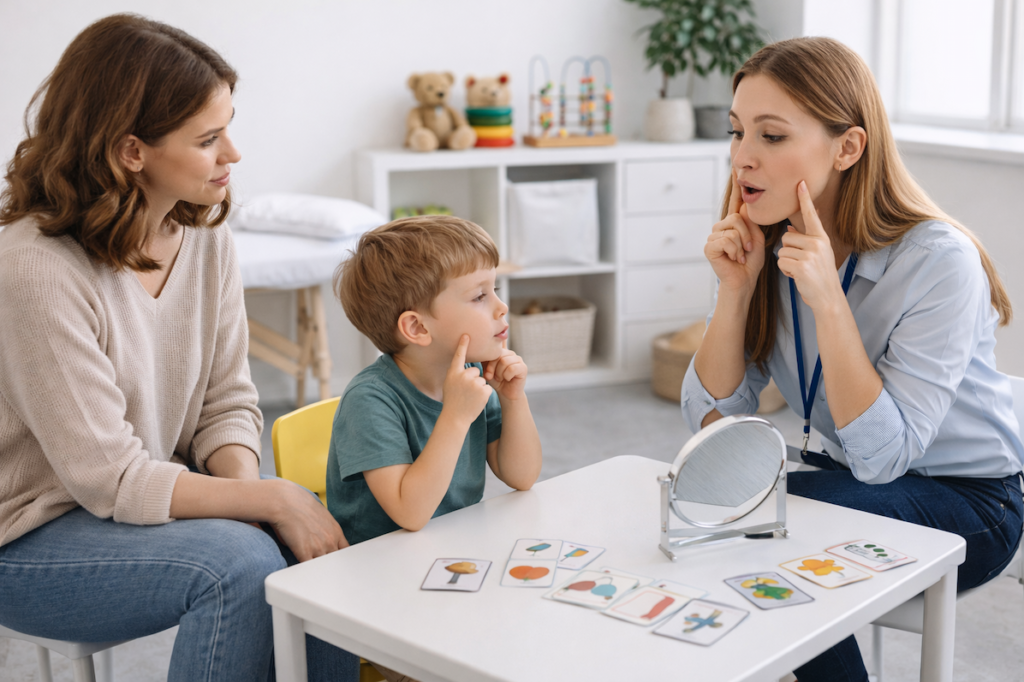
Now that you know the signs, here’s how to take the next step if something feels off. And frankly, you know your child better than anyone, so trust your gut if you sense something isn’t quite right.
A good starting point is your child’s doctor, who can check your child’s hearing and general development. If they notice any concerns, they’ll likely refer you to an ASHA-certified speech-language pathologist for a full evaluation. These specialists are trained to assess how children communicate, and they can recommend a plan based on what they find.
Here’s something encouraging to keep in mind: research shows that children who receive early intervention often catch up to their peers by the time they reach kindergarten. And if your child is under age 3, many communities offer free early intervention programs through local agencies, so cost doesn’t have to be a barrier.
Remember, the earlier you reach out, the more options you’ll have to support your child’s speech and language development.
Every Day Brings New Words and New Wins
Supporting your child’s speech and language development doesn’t have to feel overwhelming. In fact, the small things you do every day, like talking during meals, reading before bed, and giving your child space to respond, all add up over time.
And if you ever feel like your child could use a little extra help, speech therapy apps and tools can be a great way to practice at home.
At Smarty Ears, we offer a range of apps designed to make speech and language practice fun for kids and easy for parents. Many families use them to build language skills between sessions with a speech-language pathologist.