
Finding the right speech therapy apps for your child can feel overwhelming when dozens of programs promise results. Most children lose interest after just a few sessions, and parents are left wondering what went wrong.
Our team at Smarty Ears develops speech and language learning tools with licensed speech-language pathologists. We’ve seen firsthand which features keep students engaged and which ones collect dust.
With that in mind, this guide walks you through the features that hold a child’s attention during speech therapy activities. You’ll also learn what classroom educators and therapists prioritize when choosing digital tools.
How Speech Therapy Apps Build Communication Skills Through Play
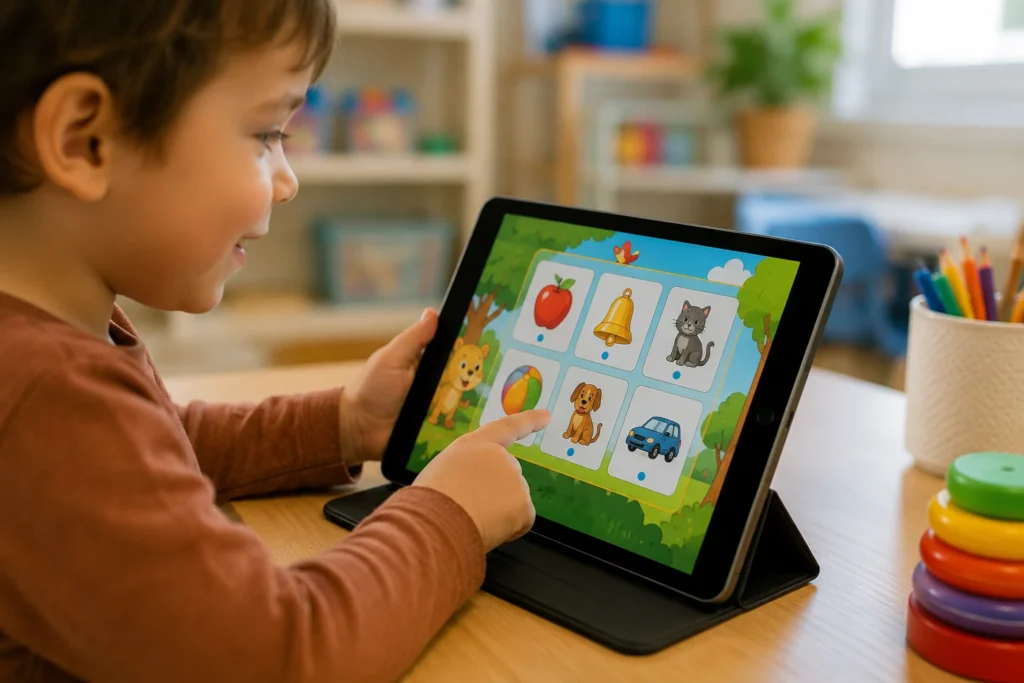
Children pick up communication skills more naturally when speech therapy apps turn lessons into play. Over time, one pattern keeps showing up with the kids who actually stick with practice. They think they’re playing a game, not doing homework.
Most speech therapy programs use reward systems like points, characters, and level progression. These features reinforce correct speech sounds and give students a reason to keep trying after a mistake (you’d be surprised how often kids ask to go back and play on their own). That kind of repetition builds confidence without the pressure of a formal therapy session.
Play also gives teachers and educators a simple way to bring speech practice into the school day. Programs that include speech therapy games that keep children engaged make it easier to fit speaking exercises between classroom subjects.
Once you see how play drives progress, the next step is knowing which specific skills to target.
Speech Sound Disorders and Language Skills Your Child’s App Should Target
The best speech therapy tools address multiple language skills and speech sound disorders in one place. And frankly, an app that only covers one area at a time means you’ll need several programs to get the same results.
Before you download anything, look for these features:
- Targeted Speech Sound Practice: Educational technology programs that let you adjust difficulty to match your child’s specific speech disorders more closely. Students who practice at their own pace retain speech sounds longer between therapy sessions.
- Language Comprehension and Vocabulary: Apps that follow evidence-based practices for spoken language disorders cover vocabulary, sentence structure, and language comprehension together. By practicing these skills, children connect words to meaning in daily life instead of memorizing them in isolation.
- Built-In Progress Tracking: Look for tools that track which speech sounds your child produces correctly and which ones still need work. That data helps parents and speech therapists plan what to focus on during the next session.
An app that checks all three boxes saves you time and gives your child a clearer path between therapy sessions.
Educational Technology That Keeps Children Motivated
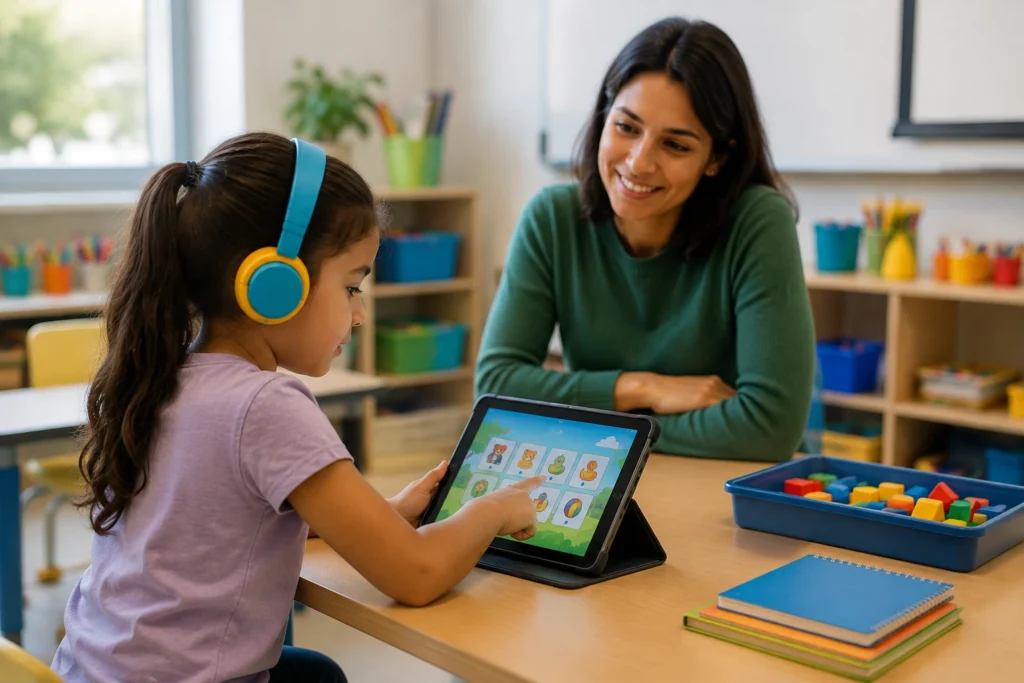
Most children lose interest in repetitive exercises within a few minutes (sound familiar?). The right educational technology changes that by making each session feel different from the last.
Now, let’s look at two approaches that do this well.
How Augmented Reality and Artificial Intelligence Support Language Therapy
Augmented reality turns static flashcard-style drills into 3D scenes children can explore while practicing speech sounds. Some of these apps pick up on a child’s trouble spots faster than you’d expect.
From there, artificial intelligence adjusts each task’s difficulty in real time, so students always work at a level that challenges them. Language therapy ends up feeling individualized for every child, and parents don’t have to configure a thing.
Practicing Minimal Pairs, Basic Concepts, and Social Skills
The technology only works if the activities behind it target the right skills. Minimal pairs exercises train children to hear and produce one sound difference at a time, like “bat” and “pat.”
Basic concepts programs take a different approach by teaching spatial concepts and descriptive vocabulary through sorting games and visual matching. Social skills modules then let students practice turn-taking and conversation in low-pressure digital scenarios (honestly, some adults could use this practice too).
These three activity types cover a wide range of speech-language goals within a single learning session.
What Speech Language Therapy Professionals Look for in Digital Tools
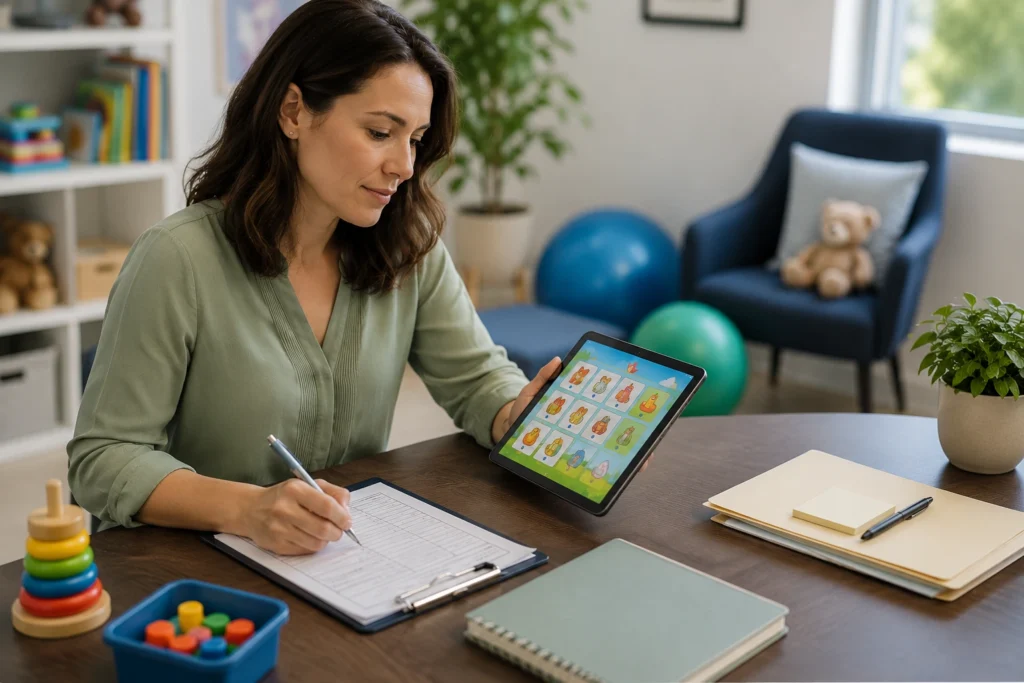
With so many apps on the market, it helps to know what speech-language pathologists actually look for.
The ones we work with check for three things every time: evidence-based activities, customization, and progress tracking. So, if the app doesn’t connect back to your child’s therapy goals, it’s just another screen.
Here’s how speech language therapy experts typically evaluate educational technology tools:
| What They Look For | Red Flags to Avoid |
| Activities aligned with evidence-based speech therapy practices | Games with no connection to therapy goals |
| Options to customize exercises for each student’s plan | One-size-fits-all programs with no adjustable settings |
| Progress reports that speech therapists can review between sessions | No data tracking or parent access to results |
Many speech language pathologists also rely on ASHA’s guidance on AAC (Augmentative and Alternative Communication) when selecting communication tools for students with speech disorders. That kind of research-backed framework gives parents confidence they’re reinforcing speech sounds and language skills at home.
What’s more, engaging digital content works best when a qualified speech therapist helps guide which programs and teaching materials your child needs.
Helping Your Child’s Speech Language Growth With the Right Tools
The right educational apps and learning tools turn speech therapy practice into a fun part of your child’s daily routine.
When students stay actively engaged, they build stronger speaking and communication skills with every session. Over time, that progress carries from the classroom into life at home.
Your child’s speech therapist and educators can help you choose the right technology and programs for their specific goals. Smarty Ears builds research-backed speech therapy apps designed by speech-language pathologists to keep student engagement high across every learning activity.
Explore our full library to find the right fit for your child.