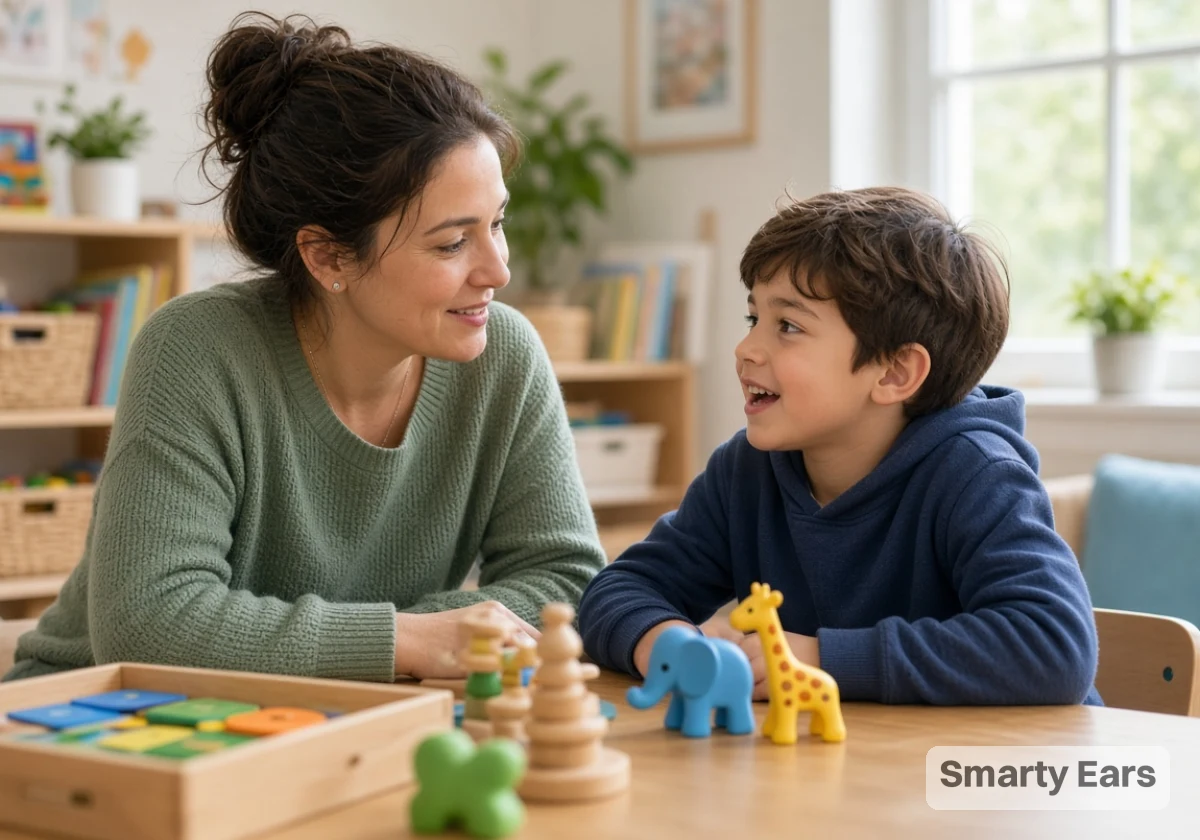
Interactive activities improve engagement because they give students a reason to say their target words again and again. A game ties each repetition to a move, a clue, or a point, so practice feels like play.
That shift helps because speech development relies on regular, accurate practice attempts. Bored students produce fewer careful attempts, and their effort fades well before the session ends. At Smarty Ears, we create speech therapy tools for SLPs who need students focused long enough to keep practicing.
This guide explains why drill-based sessions lose students and covers five games that hold attention through a full session. You’ll also learn how parents can run the same games at home and which engagement signs to track each week.
Why Does Drill-Based Speech Therapy Lose Students So Quickly?
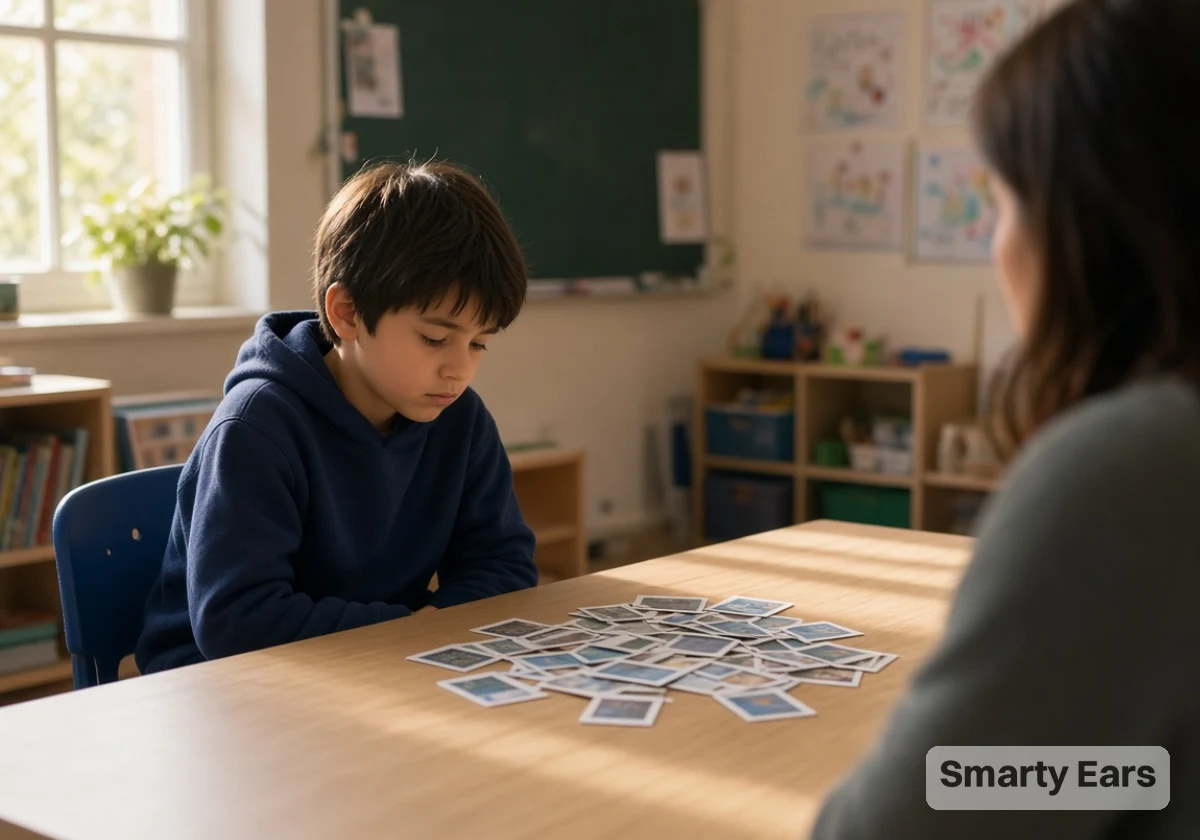
Drill-based speech therapy loses students quickly because the task stays identical from the first card to the last. A child’s attention drops once nothing new happens, and a stack of flashcards offers no goal beyond reaching the bottom.
That boredom shows up in the productions themselves. Kids start rushing, mumbling, or guessing (with plenty of sighs), so the speech-language pathologist hears fewer accurate tries. Sloppy attempts slow progress in articulation and phonology work. In articulation therapy, careful repetition teaches the mouth the movement pattern for clear speech production. Rushed tries skip that step, so speech clarity improves more slowly.
The problem also follows students out of the therapy room. Most kids who groan when the word cards come out won’t ask to repeat that drill at home. That means their speech and language skills stay tied to one room and one adult. Carryover into everyday talk and social communication slows down too.
The fix rarely requires new targets. Instead, SLPs can wrap the same target words in interactive learning, so students have a goal to chase while practice stays focused.
Interactive Speech Therapy Activities: Five Games That Keep Students Practicing
Every move in an interactive speech therapy activity should require a spoken word. Good speech therapy games keep the target sound at the center, and the game pieces serve as the reward.
If you’re planning next week’s speech therapy sessions, try these five formats. Each one also works with digital tools such as speech apps on a tablet.
Scavenger Hunts for Target Speech Sounds
Hide picture cards around the room, and have the child name each one aloud before collecting it. Walking between finds breaks up long sitting time. Because every card shares one target sound, each find adds another speech sound production attempt. For younger children, a sensory bin filled with rice or dried beans works as a tabletop scavenger hunt.
Sticky Note Posts Hidden Around the Room
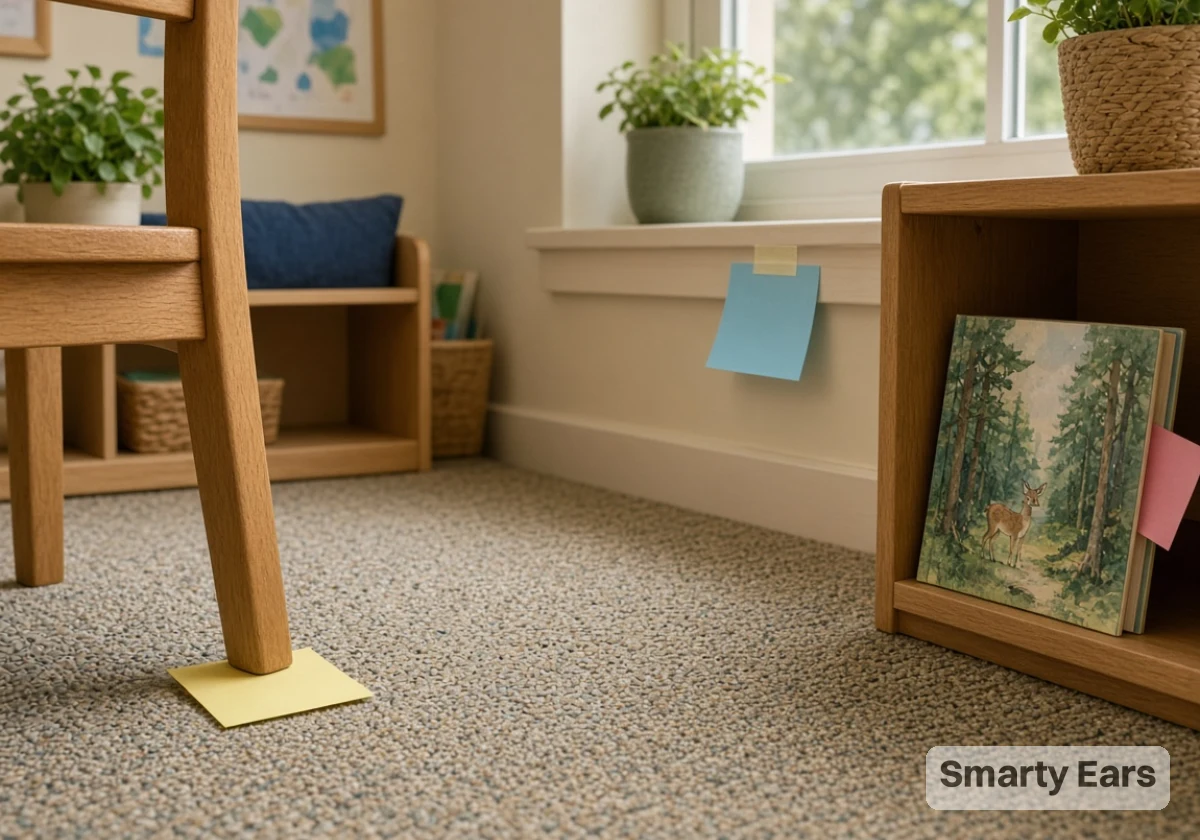
Once single words feel easy, move the hunt up a level with sticky notes. Write target words on notes, and place them under chairs, on windows, and behind books. Students say each word in a carrier phrase like “I found a ___” before peeling it off. Add full sentences once phrases come easily.
Board Games With an Articulation Practice Turn
Classic board games like Candy Land or Chutes and Ladders work well once you add one rule. Every player, including the SLP, says three target words before taking a turn. Card games such as Go Fish follow the same pattern, with students asking for cards that contain their sound.
Turn-taking also builds waiting and listening, two social skills that support pragmatic language.
Obstacle Courses That Pair Movement With Target Words
An obstacle course built from cushions, tape lines, and plastic cups gives restless kids a reason to move between tries. Put a picture card at each station, and have the child say the word before crossing. For example, students might say “sun” before jumping over a cushion or “sock” before stepping across a tape line. Use three or four stations to keep the activity manageable.
In our experience building games for speech therapy, students who struggle to sit still often practice longer when movement is included. If a child misses a sound, the SLP can model it and offer another try.
Storytelling Games and Other Language Activities
Picture sequences let older students build expressive language while repeating targets in context. Ask each student for a three-part story that uses at least two target words. For younger kids, a short story time with a familiar book offers the same practice. Rhyming words suit final sounds, because students repeat one ending across pairs like “cat, hat, bat.” Both language activities move practice past single words and toward everyday conversation.
Quick Tip: Rotate two or three of these formats each week so the novelty stays fresh. Keeping the same target list across games also lets you compare accuracy fairly from one format to the next.
Giving Parents Support to Keep Speech Practice Going at Home
The same games travel well to the kitchen table or the car. Home practice adds repetitions that one or two weekly speech sessions can’t fit. Parents also hear their child talk all day, which creates constant opportunities for language practice.
The catch is that many parents can’t tell a correct production from a close miss. Some skip practice altogether, while others correct every word until the child shuts down. Short, specific instructions help with both habits (five calm minutes a day is plenty). Framing practice as a game rather than homework also lowers pressure for parent and child.
A home kit works when a parent can run it at dinner without special training. Pack these five items before you send a kit home this week:
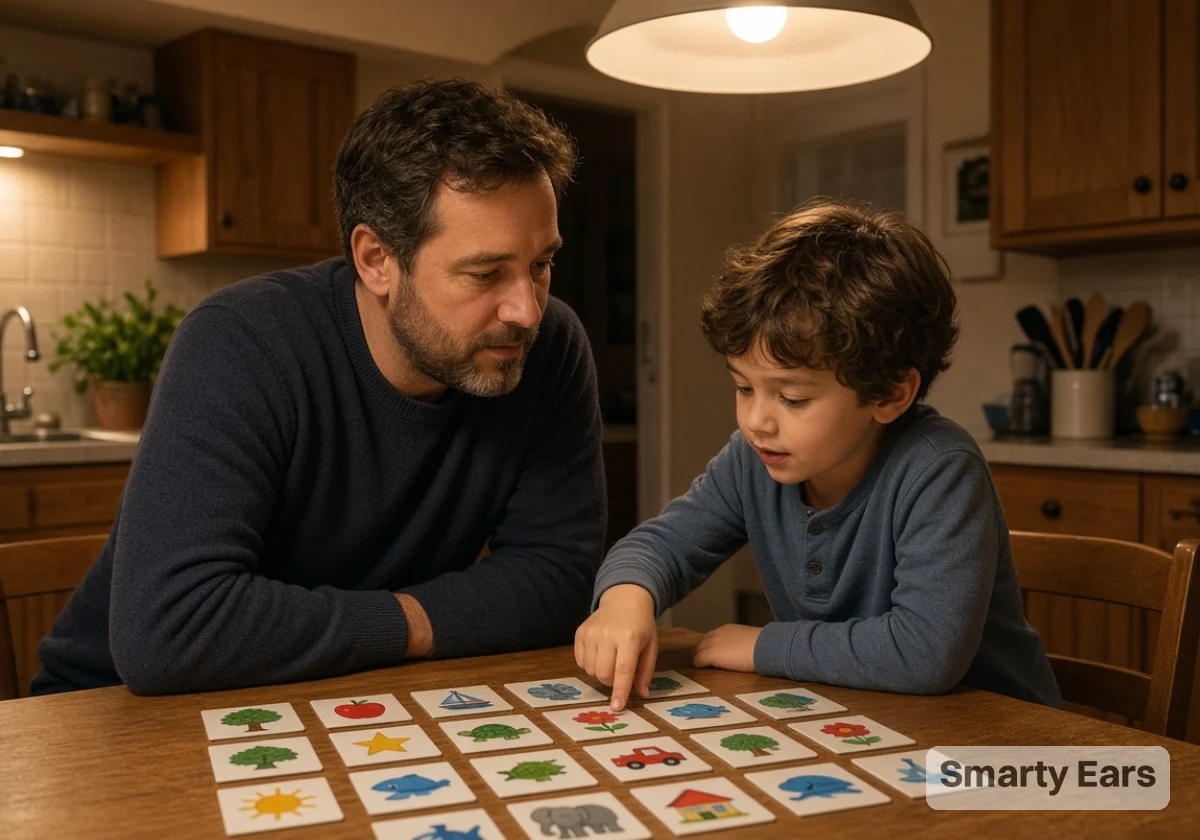
- Picture Cards for Target Words: Pick six to eight words that share the child’s current target sound. Photos or simple drawings both work, as long as the child can name each one. Swap in new cards only after the child says most of them correctly.
- One Game From Sessions: A familiar game makes home practice easier for parents. Choose one the child already plays with the SLP, so there’s no need to explain new rules. Most families use familiar activities more consistently than brand-new ones.
- A Recorded Sound Model: Record yourself saying each target word correctly on a phone or tablet. Parents can replay the clip whenever they can’t tell whether a try was right. A short audio clip gives families a reference point that written notes can’t provide.
- A Simple Tally Sheet: Parents only need a small grid to record correct and incorrect attempts. A check or cross beside each word keeps the process simple, even during five-minute sessions. The completed sheets help you compare home and clinic accuracy at the next appointment.
- Praise and Correction Tips: Write two or three lines on when to praise and when to model the sound again. Encourage parents to praise effort first and repeat the correct word without saying “no.” This approach helps the child stay willing to try again.
The recorded model often helps parents most, because it gives them a correct sound to compare against. Use the same kit for two weeks before changing anything so families can build a steady routine.
How to Measure Student Engagement and Speech Practice Progress
Engagement is easy to measure once you know what to count. A 2025 arXiv preprint asked 13 Nevada SLPs about socially assistive robots in therapy. All 13 selected increased engagement and motivation as an expected benefit, and 67% selected support with repetitive tasks.
The study didn’t test robots with students, so treat these figures as clinician expectations. Still, SLPs clearly see novelty and a clear goal as drivers of practice, and games at the table offer both.
To check whether your activities for speech therapy are working, watch for these three signs:
- More Tries Per Session: Engaged students produce more attempts in the same block of time because they keep asking for another turn. More attempts give the child more chances to land the target sound correctly. Count attempts during one session each week, and look for a steady rise over a month.
- Self-Correction Without Cues: Some students begin correcting their own errors before you prompt them. This habit shows they can hear the difference between correct and incorrect speech sounds. Mark each self-correction on your data sheet so you can track this listening skill over time.
- Requests to Play Again: When a student asks for a game by name, the activity motivates without stickers or prizes. Leave that game in rotation, and swap in a new word list so practice stays challenging. A requested game also makes a strong pick for the home kit.
Track these signs alongside accuracy so you can tell real engagement from a lucky day. A game that improves all three belongs among your most effective speech therapy exercises.
Make Speech Development Something Students Look Forward To
Pick one game from this list for your next session, and send its home version to parents the same week. Start with the format that fits your caseload, such as obstacle courses for younger students or storytelling for older ones. Then count attempts for a month to see which formats your students respond to. Once you know which games hold attention, plan next term’s sessions around them.
At Smarty Ears, we build therapy apps and resources for SLPs, teachers, and families. Contact us to find activities that match your students’ goals and communication abilities.