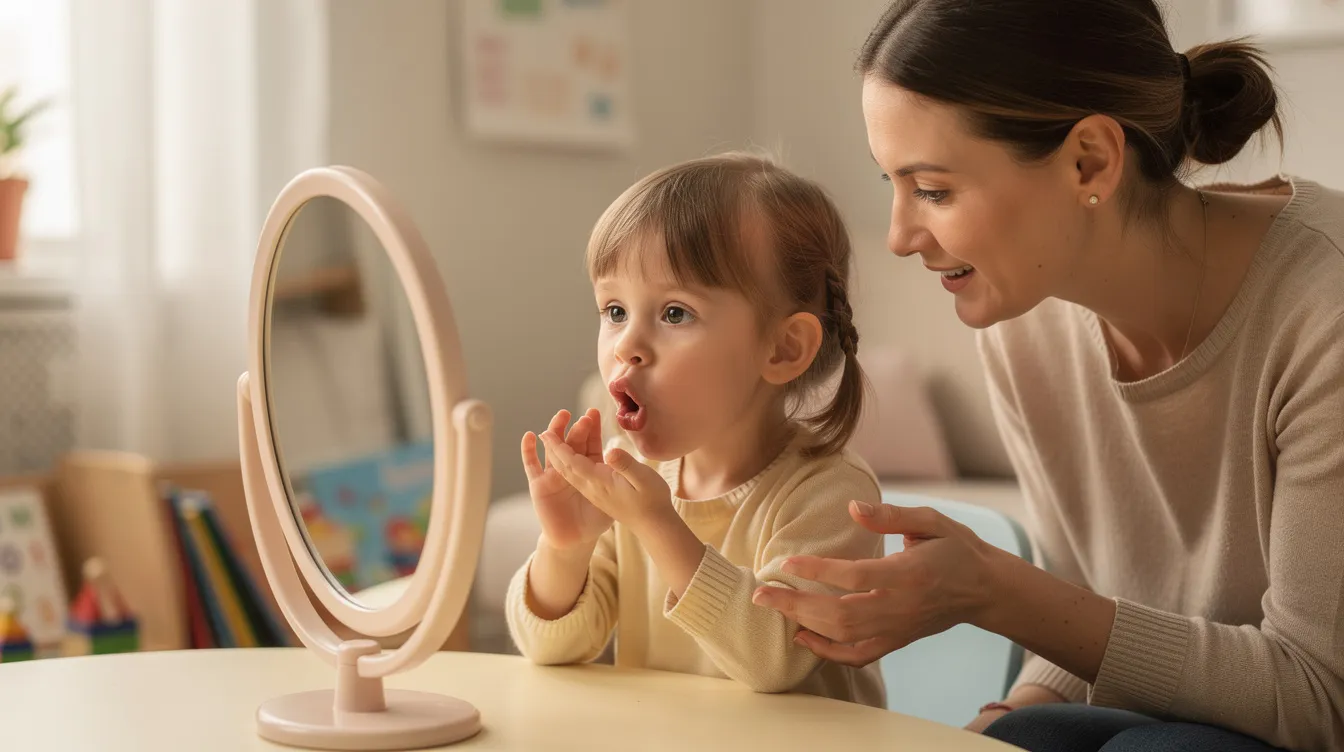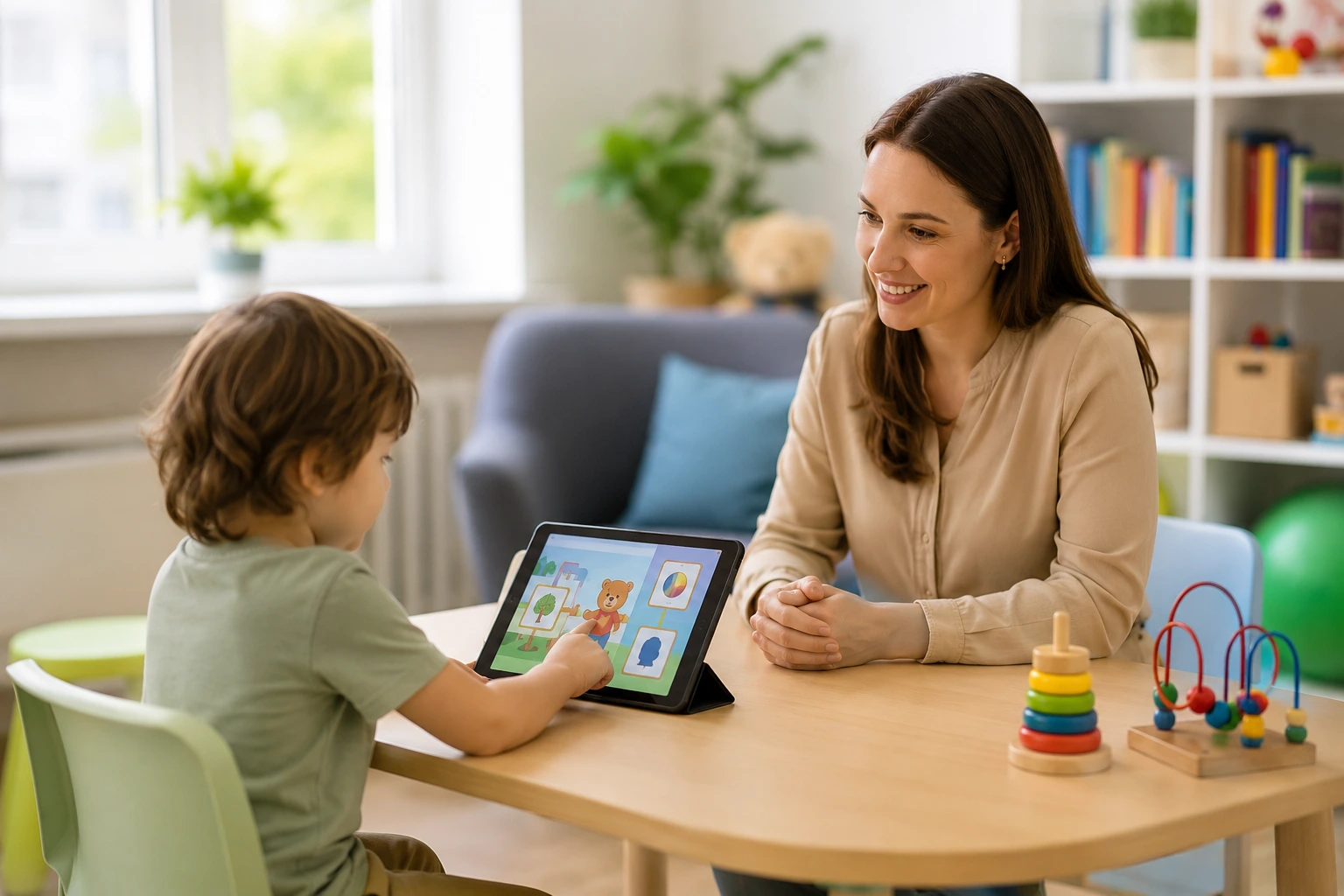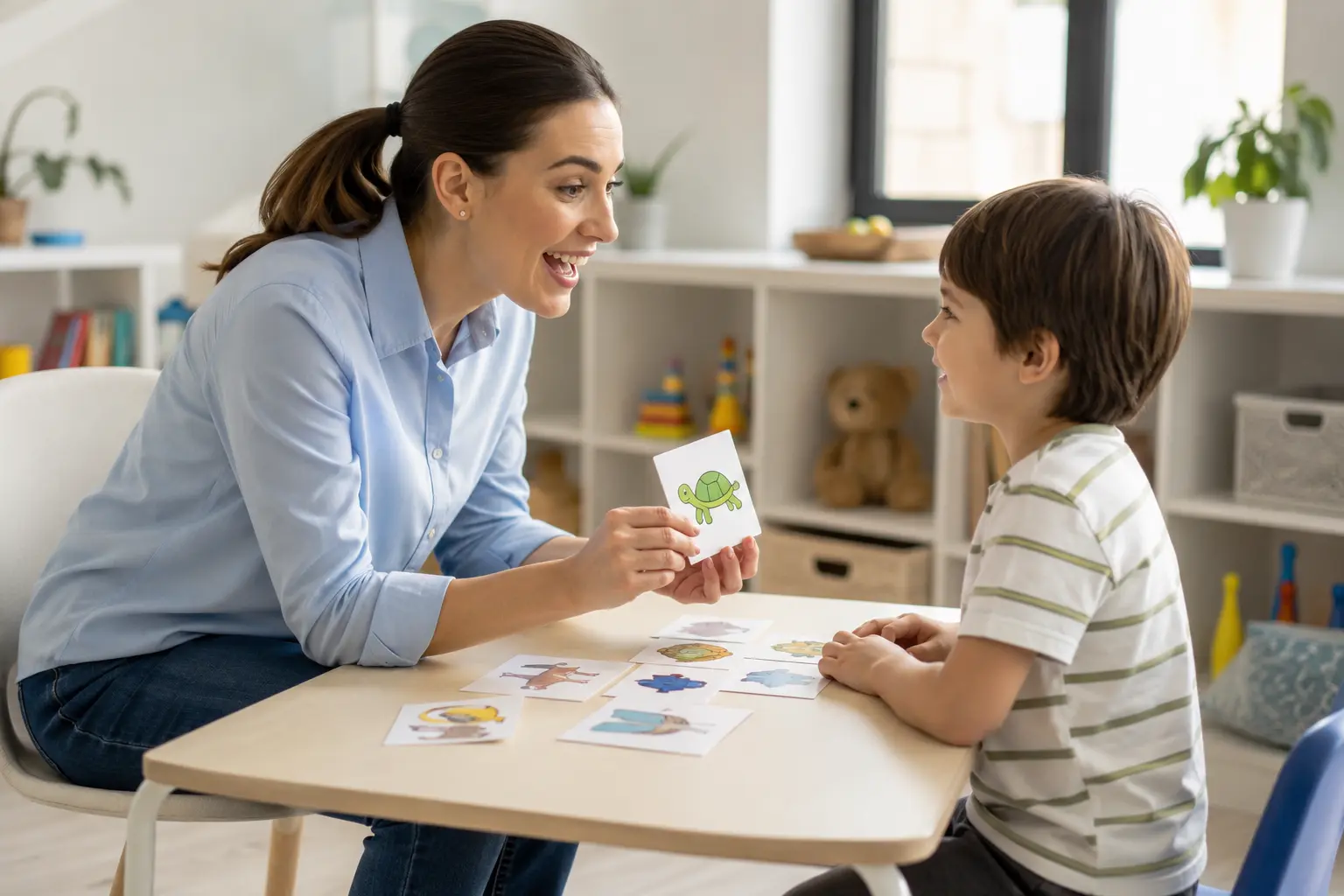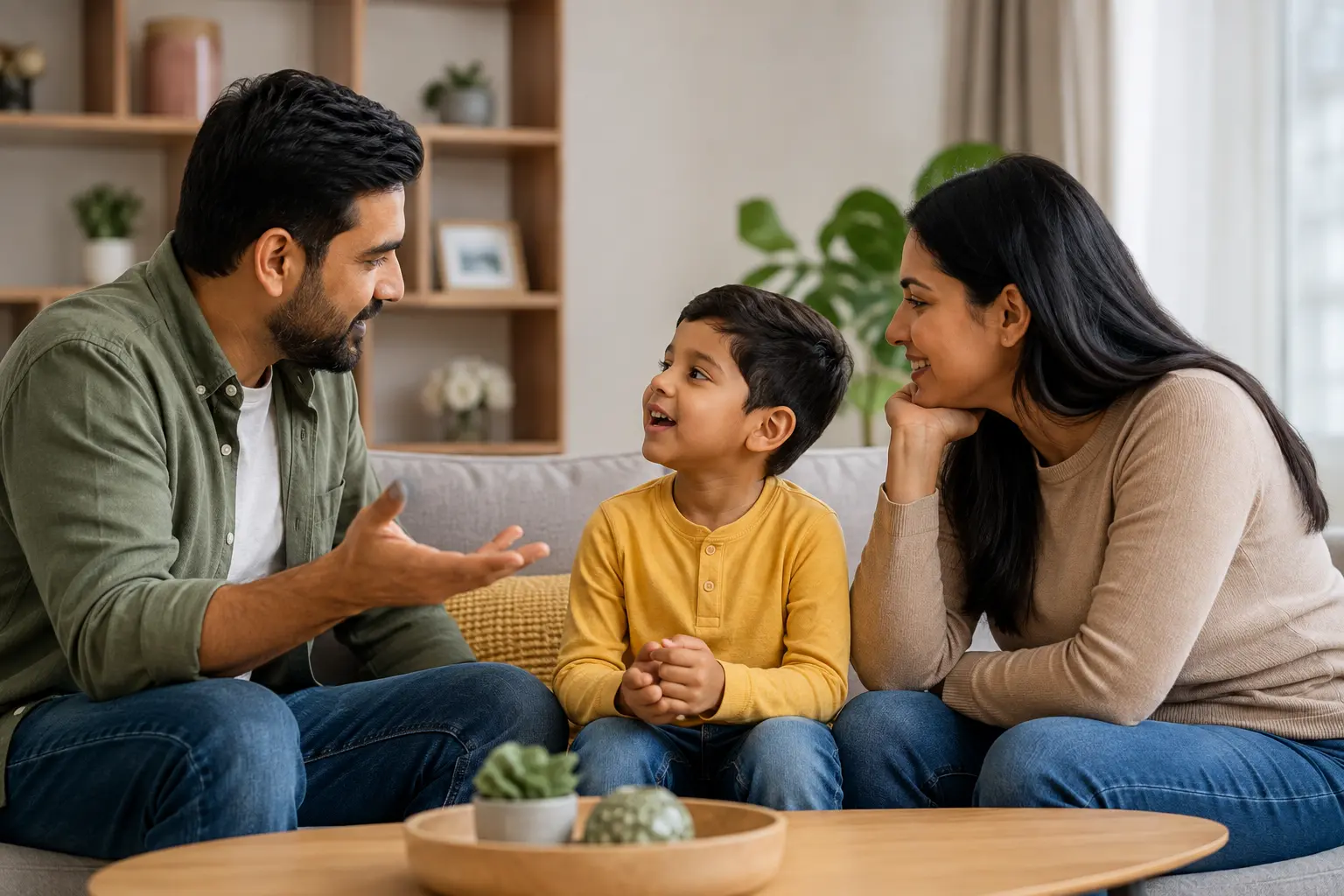
Your child picks up speech and language skills from the conversations happening around them every day. You don’t need flashcards or scheduled teaching sessions for this to happen. Simple, everyday family communication does most of the heavy lifting.
However, it helps to know that speech, language, and communication are actually three separate things. Speech is how your child produces sounds. Language is about understanding and using words. And communication goes a step further by covering gestures, expressions, and nonverbal cues.
Once you see that distinction, you’ll find that every family member contributes to child language development.
In this article, we’ll cover how daily conversations support speech development. You’ll also learn ways to build language skills at home, signs that may point to a need for speech therapy, and strategies to encourage confident communication.
How Language Skills Grow During Everyday Conversations

Children develop language skills by listening to and joining in on the conversations around them. So, something as simple as chatting during breakfast or reading a bedtime story can give your child more chances to practice speaking and understanding new words.
With that in mind, below are some practical ways your family can support that growth at home.
How Children Naturally Build Language Skills
Listening always comes first. Babies take in vocabulary through repetition and everyday experience long before they ever speak. In fact, most babies recognize the basic sounds of their native language by 6 months old.
That means even casual moments, like describing what you’re cooking or pointing out a dog on a walk, can help your child connect words with the world around them.
Active Listening Builds Confident Communicators
Similarly, good communication starts with how you listen, rather than just how you talk. So follow your child’s lead and give them a moment to respond instead of filling every pause.
For example, if they say “doggy big,” try expanding with “Yes, that’s a big brown dog!” This approach, called language expansion, builds confidence and fluency much faster than correcting every small mistake.
The Role of Nonverbal Communication
Children start communicating long before they can form full sentences. Typically, they rely on:
- Eye contact to connect
- Facial expressions to show emotion
- Gestures like pointing or waving to share wants
- Tone of voice to express feelings
When you respond positively to those cues, it encourages them to keep trying. This early back-and-forth strengthens understanding and lays the groundwork for stronger speaking skills as they grow.
Making Daily Routines Into Language Lessons
You don’t need to set aside special practice time for speech development. Your everyday routine already has plenty of built-in moments for language development.
Here are a few ways to make the most of them.
Breakfast
Start the day by naming foods, colors, and feelings together at the table. Like, a simple “How are you feeling this morning?” can open up a conversation and give your child a chance to practice putting thoughts into words.
Car Rides
Long drives can feel quiet, but they’re actually full of learning moments. Point out trucks, animals, or funny road signs along the way. Basically, describe what you both see to help your child pick up new vocabulary without even realizing it.
Grocery Shopping
Go through each aisle and let your child name the fruits, count items in the cart, or choose between two snacks. This kind of involvement also gives them a sense of independence and builds early decision-making skills.
Playtime
Pretend play is one of the best ways children practice language naturally. When they run an imaginary restaurant or play doctor with their stuffed animals, they start combining words and ideas in ways that feel fun rather than forced.
Reading Together
Instead of just reading the words on the page, pause and ask open-ended questions like “What do you think happens next?” These questions encourage your child to think, respond, and use new words.
Bath Time
Try talking through the steps together, like “first we wash your hands, then we rinse off the soap.” This is a great moment to practice sequencing (which is how we organize actions in order). Over time, your child will start describing these steps on their own.
Bedtime
End the day with a quick chat about what happened. Ask what made them happy, what surprised them, or even what felt a little tricky. These short reflections keep language practice going right until lights out.
Common Communication Mistakes Families Can Avoid
A few everyday habits can slow down speech and language development (most families don’t even realize they’re doing them). The good thing is, they’re easy to fix once you know what to look for:
- Too Many Quiz Questions: Constantly asking “What’s this?” or “What color is that?” can make conversations feel like a test. Instead, try commenting on what your child is doing, and let them respond on their own.
- Correcting Every Mistake: It’s tempting to fix every pronunciation error right away. But a better approach is to simply model the correct word in your reply without drawing attention to the slip.
- Talking More Than Listening: Pausing a little longer after you ask something can open the door for more meaningful responses. Remember, children need space to gather their thoughts and express ideas at their own pace.
- Screen Time Over Conversation: Apps and videos have their place, but they can’t match the back-and-forth of real family communication. Children pick up language best through live, responsive interactions with the people around them.
- Perfection Over Connection: The goal is for your child to feel heard and understood, not judged for how they say something. So always try to focus on meaningful communication rather than flawless speech. It’ll make every conversation feel safer for them.
These small, consistent changes in how your family talks together can support your child’s language growth in a lasting way. You don’t need a perfect plan for it, either. Just keep the conversations going, and the progress will come.
When Family Communication Is Enough and When Speech Therapy Can Help

Most of the time, everyday family communication gives children what they need to develop speech and language skills naturally. But sometimes, a child may need a little extra support from a professional.
Here’s how to tell the difference and what to expect if speech therapy becomes part of the picture.
Signs That May Need Professional Support
While every child is different, certain patterns can suggest it’s time to talk with a health care professional. Take a look at these few signs worth discussing with your child’s doctor:
- Difficulty Understanding Words: By age 2, most children can follow simple directions like “give me the cup.” If your child regularly struggles with basic requests like these, that’s something to keep an eye on.
- Hard-to-Understand Speech: It’s completely normal for toddlers to mispronounce words here and there. However, if most of what your child says is difficult for strangers to understand by age 3, it may be worth looking into further.
- Trouble Joining Conversations: On the other hand, if your child tends to avoid talking with family members or other children, it’s a good idea to explore why. Because by age 3, most children can answer simple questions and take basic turns in a conversation.
- Limited Vocabulary: Children typically have around 50 words by their second birthday and start putting short sentences together soon after. A noticeably smaller word bank could point to a delay in language development.
- Delayed Speech and Language Development: If your child continues to have trouble understanding language or is not reaching speech milestones expected for their age, a specialist can find the cause.
- Difficulty Following Directions: Struggling with two-step instructions, like “pick up your shoes and put them by the door,” can sometimes point to a receptive language concern that may need further assessment.
If any of these feel familiar, try not to panic. Early intervention can improve a child’s long-term communication skills. So, the sooner you reach out, the more support options you’ll have available.
Understanding Speech Disorders and Language Disorders
Speech and language issues can look quite different from one another.
Speech disorders affect how a child produces sounds. Apraxia of speech, for instance, makes it hard for children to form words correctly even when they know what they want to say.
Language disorders work a bit differently. They affect how a child understands or puts together words and sentences. One of the more common types is developmental language disorder (DLD), which affects roughly 7% of children and can impact both comprehension and expression.
Hearing also plays a big part in all of this. Children who have trouble hearing sounds clearly often struggle to reproduce them in their own speech. If you suspect a hearing concern, a simple hearing test through your child’s doctor is a good place to start.
What Happens During Speech Therapy?
Speech therapy usually starts with an assessment.
Here, a speech-language pathologist observes how your child communicates, listens to their speech sounds, and checks how well they understand language.
After that, the therapist creates a plan based on your child’s specific needs. These sessions typically last 30 to 60 minutes and might include vocabulary exercises, breathing and voice activities, or even communication tools like sign language.
We’ve found that family-centered approaches tend to produce the strongest results. And when parents stay involved and practice strategies at home between sessions, children tend to make faster and more lasting progress.
Build Strong Language Skills Together Every Day
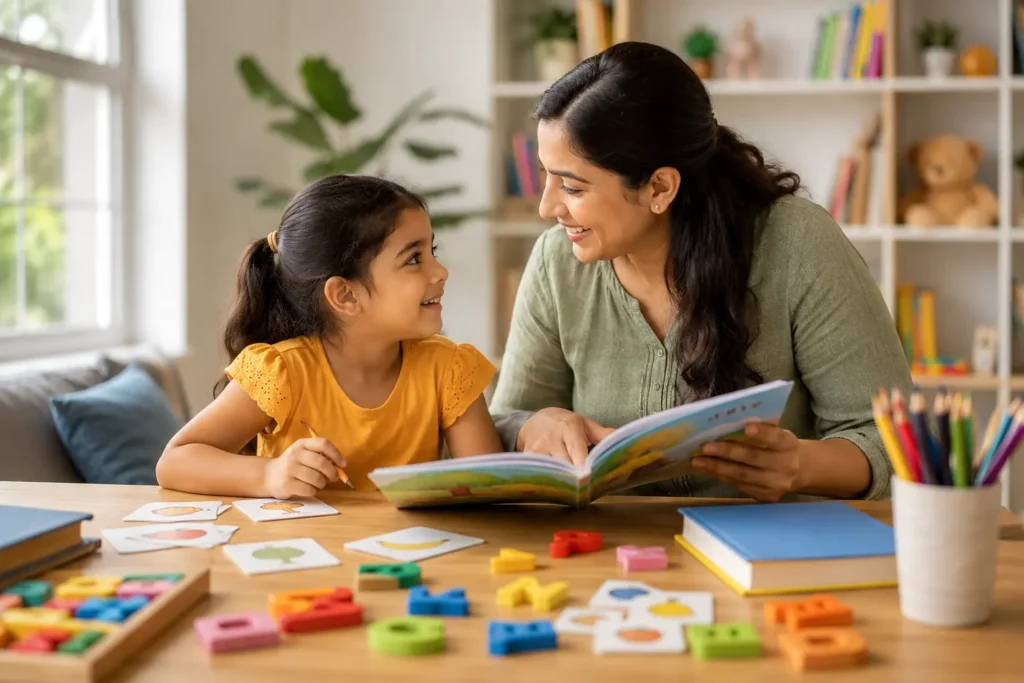
So, what did you think? If you’ve picked up even one idea from this article, you’re already heading in the right direction.
You don’t need hour-long practice sessions to support your child’s speech and language development. Even a few minutes of conversation during meals or car rides can make an impact over time.
And don’t forget to get the whole family involved. Siblings, grandparents, and other family members each bring their own words and stories, which gives your child more opportunities to practice. The goal is to create a home where children feel comfortable speaking up, and to celebrate progress rather than expect perfection.
For a little extra help along the way, Smarty Ears offers a speech therapy program that makes practicing language skills fun for the whole family.