
Your child works hard during speech therapy, but once that session ends, five or six days pass before the next one. Without practice in between, kids often forget the sounds, words, and techniques they just picked up.
Home practice fills that gap, and it doesn’t have to take long. At Smarty Ears, we’ve helped thousands of families build short daily routines that lead to measurable progress in their child’s communication skills.
In this guide, you’ll learn how consistent practice strengthens language development and speech clarity. We’ll walk you through exercises, activities, and advice from therapists on supporting speech progress at home between therapy sessions.
Most of these ideas take 15 minutes or less, so let’s get started!
Why Speech Therapy Practice at Home Helps Language Development

Speech therapy practice at home gives your child more chances to repeat target words and sounds between sessions. Each time they practice, it strengthens the neural pathways that control how they speak. And over time, new sounds start to feel natural instead of forced.
We’ve seen that progress with the families who use our apps. Even 10 to 15 minutes of daily practice adds up to nearly an hour of extra work each week (and that’s on top of what they do with their therapist). And honestly, that’s all it takes. Research shows that parent-implemented speech and language therapy produces better outcomes when a licensed SLP guides the process.
Children who practice between sessions tend to hit their speech-language goals sooner. You’ll notice a child working on the “r” sound will begin to use it in full sentences faster when they rehearse those same skills every day.
Now, let’s get into the exercises themselves.
Breath Control and Articulation Exercises for Daily Speech Practice
As we mentioned before, most of these therapy exercises at home take less than 15 minutes and use things you already own. Your child can work on speech clarity, vocal endurance, and breath control and vocal coordination with a few simple daily activities:
- Blowing Bubbles: Have your child take a deep breath and blow bubbles slowly through a wand. Controlling that airflow trains the same muscles they use to speak clearly and hold their voice steady (kids get a kick out of this one).
- Mirror Work for Articulation: Set up a small mirror at your child’s eye level and let them repeat target words while watching their mouth move. Over time, this builds muscle memory in the tongue and jaw.
- Snack Time Sound Practice: During a snack break, ask your child to name each food and then use that word in a sentence. When you tie practice to creating consistent routines for children, it stops feeling like homework and becomes part of the day.
Try one or two of these for a week. You’ll likely notice your child getting more comfortable with the sounds they focus on in therapy.
Speech and Language Activities That Build Communication Skills
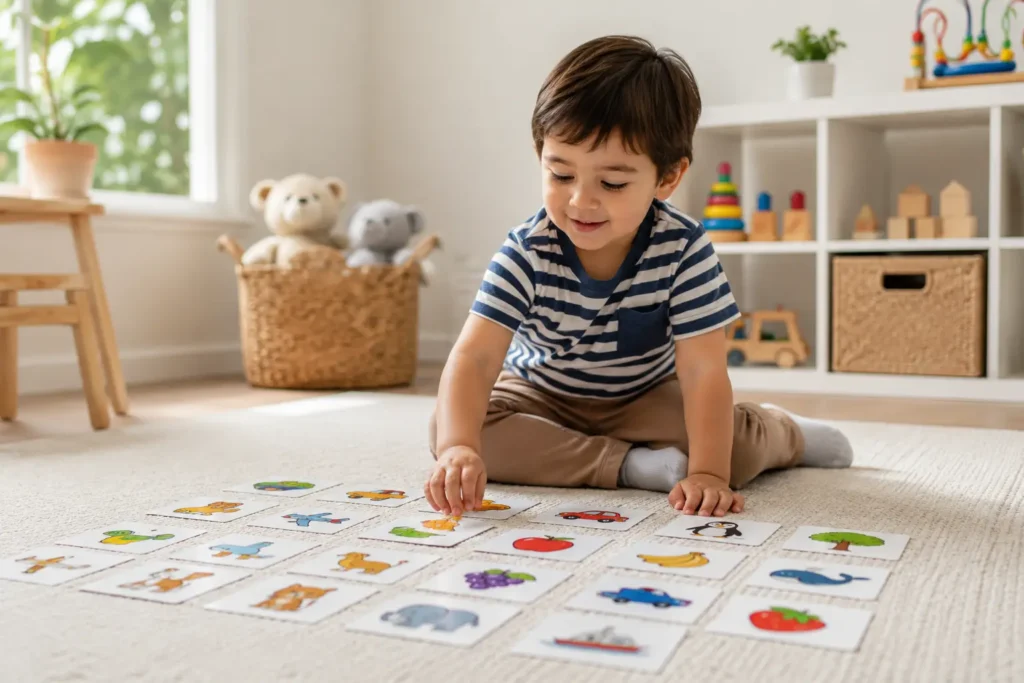
Once those daily drills are in place, you can add in activities that feel less like practice and more like play. Here are two ways to work speech and language goals into your child’s routine without it feeling forced.
Games and Group Chat at Home
Board games that involve taking turns and describing cards out loud help your child communicate without any pressure. Even a simple group chat around the dinner table works.
Try asking your child to talk about their day, or have each family member share a short story. These back-and-forth conversations strengthen expressive language and give kids a reason to speak up on their own.
Speech Therapy Apps and Digital Tools
Speech therapy activities on a screen can reinforce the same goals your therapist sets during sessions. Many apps walk children through sequencing tasks and grammar drills that build cognitive communication skills.
For example, some apps ask kids to plan a sentence before saying it out loud, which sharpens speech clarity, language comprehension, and vocabulary. And believe it or not, most kids won’t even notice they’re working on speech goals.
Bottom Line: When you mix structured speech therapy exercises with everyday conversation, your child practices comprehension and expressive language without the pressure of a formal drill. That’s what keeps them interested enough to talk more each day.
From here, it helps to hear what speech therapists themselves recommend.
What Your Speech Therapist Says About Home Practice

One of the first things your speech-language pathologist will do is create an individualized treatment plan for your child. That plan includes therapy exercises to practice between sessions, and children who stick with them tend to hit their speech-language goals on schedule.
But even a solid plan can fall flat if home practice goes sideways. We’ve heard directly from Speech-Language Pathologists (SLPs) that one mistake comes up more than any other. Frankly, this one catches a lot of parents off guard. When a loved one corrects every word their child mispronounces, that child stops wanting to talk (and getting them to open up again takes twice as long).
Speech therapy at home doesn’t need to look like a formal language therapy session, though. If your child is in early intervention for speech-language challenges, or recovering from a stroke or traumatic brain injury, short daily bursts of more practice will support their progress more. So, set goals with your therapist, keep things relaxed, and let your child speak at their own pace.
Keep in Mind: Encouragement goes a lot further than correction ever will.
Now that you have a full picture of what home practice looks like, here’s how to keep it going.
Keep Speech Language Goals on Track Between Sessions
Consistent repetition of words, sentences, and communication exercises gives your child the best chance to carry skills from therapy into everyday conversation. Even on busy days, two or three minutes of speech practice during car rides or bedtime still count.
Don’t hesitate to reach out to Smarty Ears if you’re facing challenges with techniques or exercises. Your therapist can support you with evidence-based speech-language pathology research and adjust your child’s plan to match their growing communication skills and language skills.
Remember, every child’s voice is worth the effort, and with a little daily focus, yours will get there, too!