
You can support your child’s speech practice between sessions with short, playful exercises included in everyday routines at home. After all, practicing a target sound for a few minutes over breakfast gives your child a chance to say it every single day rather than a long Sunday drill.
Many parents worry they’ll model a sound incorrectly or praise an attempt that’s still off, which undoes the therapist’s work. But that rarely happens. Instead, each extra try gives your child another chance to hear the sound, notice the difference, and adjust before the next session.
To help you get that session right, Smarty Ears offers simple sound and word practice games. We’ll also cover:
- Why daily repetition moves progress
- Which everyday activities build language
- What home practice can’t replace
Now, let’s start with why a few minutes of practice is significant for speech development.
Why Daily Practice Influences Your Child’s Speech Development at Home
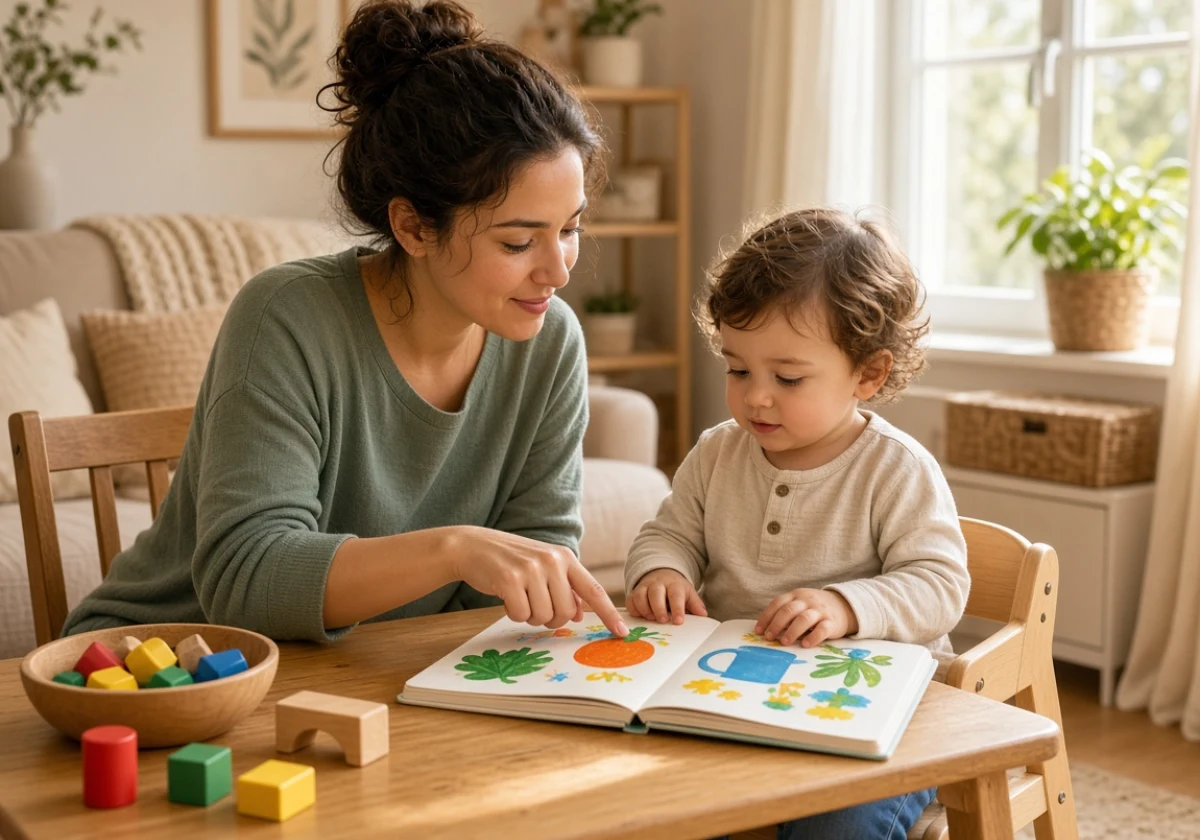
Parents often underestimate how much five minutes of focused practice a day can change a child’s progress. Generally, a weekly appointment gives your child one block of guided work, and the days in between belong to you. During those days, you can try a quick five minutes of practice for your child’s speech improvement.
In fact, a meta-analysis of caregiver-led language interventions found that children whose parents and caregivers led the practice showed significantly better language outcomes. In other words, the days between appointments are where your short daily practice keeps your child moving forward.
Those short daily sessions pay off because they give your child the repetition that speech learning depends on. Your child needs to hear and practice speech sounds many times before the mouth movement turns automatic. That’s why several short sessions spread through the day beat one long one (tired children stop trying long before the timer does).
For those reasons, early intervention works so well in the preschool years. Young children build speech and language connections quickly there, so the communication skills you practice now keep compounding.
Language Development Activities That Fit Everyday Routines
Language development activities support language development at home without adding anything new to your schedule. They weave conversation into the moments you already share, so if you feel silly narrating a bath out loud, your child still gains from every word.
Try these five everyday activities to encourage speech development:
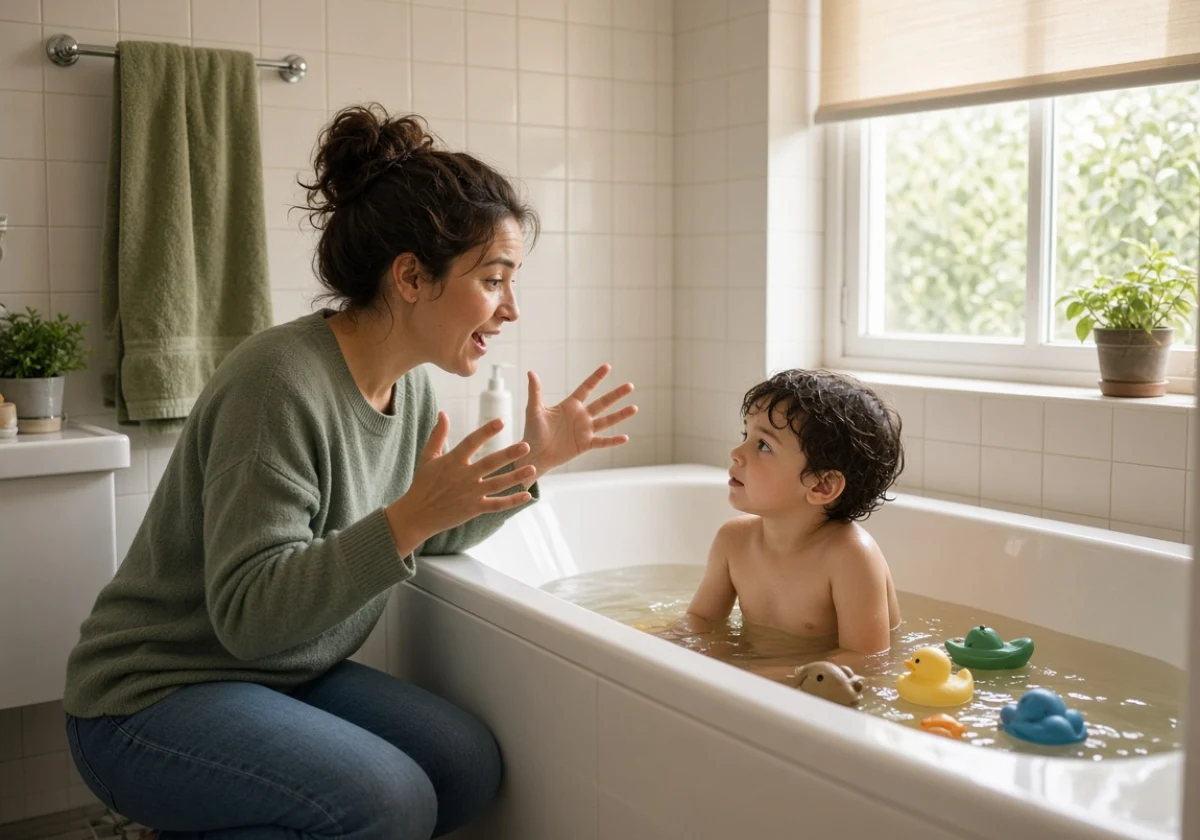
- Narrate Daily Routines: Talking through bath time, meals, and car rides hands your child new words in context. Plus, naming the action as you do it links the word to meaning.
- Play Simple Word Games: Games like I Spy build vocabulary and turn-taking without feeling like work. Each round gives your child a turn to listen, think, and answer. As a result, your kid gets quicker at understanding what they hear and putting a response into words.
- Read Picture Books Together: Pause to name objects and ask open-ended questions rather than yes-or-no ones. Also, let your child finish familiar phrases, since the gap invites a word.
- Sing Songs and Nursery Rhymes: Because rhymes repeat, your child gets many tries at the same speech sounds. Melody also stretches words out, which makes each syllable easier to catch.
- Follow Your Child’s Interests: When practice centers on the toys, animals, or stories they already love, attention lasts far longer. This way, interest does the work that pressure can’t.
Quick Tip: Pick two of the five activities above at home and attach them to routines you never skip, like dinner and bedtime.
And we’ll suggest reading picture books together as a natural first choice for bedtime. For context, the American Academy of Pediatrics links shared reading to healthy social-emotional, cognitive, language, and literacy development.
Speech Therapy at Home vs. Professional Sessions: What Each One Does Best
Now that you have activity ideas, it helps to know which jobs home practice handles well and which ones only a speech-language pathologist can do. Knowing the split shows you where your five minutes a day count most, and which questions to save for the next appointment.
This table compares home practice and professional sessions side by side.
| Speech therapy at home | Professional sessions | |
|---|---|---|
| Who leads it | Parents and caregivers | Speech-language pathologist |
| Main goal | Repetition and daily practice | Assessment, technique, and new goals |
| Frequency | Short bursts throughout the day | Weekly or biweekly appointments |
| Best for | Reinforcing sounds and words already introduced | Diagnosing speech delay and guiding early intervention |
Honestly, neither column replaces the other (and no app replaces a proper evaluation by a clinician). Improving speech takes both, because each side does a job the other can’t.
For example, your therapist sets the targets, catches errors you might miss, and decides when your child is ready for a new sound. Your repetition at home further makes those targets stick, so a sound your child can only say in the clinic becomes one they use at the dinner table.
The two sides also feed each other. What you notice at home (a sound that slips when your child is tired, or a word they avoid) tells your therapist things a single session can’t show. And if home practice stalls on the same error for a few weeks, you can easily raise it at the next appointment.
Where Can Parents Find Support and Ideas Between Appointments?
You can find support and ideas between appointments through your child’s speech therapist, blog posts and videos from licensed therapists, and apps. For instance, your therapist might give you a target sound at Monday’s session, and a short video can show you the right mouth shape midweek.
Below, you’ll learn what to ask your therapist, which posts and videos to trust, and how to pick apps and books.
Asking Your Speech Therapist for a Home Practice Plan
Start with the person who already knows your child’s history. If your speech therapist has assessed your child and knows the condition upfront, their advice will fit your child rather than a generic checklist. Put that knowledge to work by asking for two or three target sounds, plus speech activities you can run in five minutes.
Then ask what a correct version of each target sound looks and sounds like, and how to respond when your child’s attempt is still a little off. Those questions save weeks of practicing an error nobody caught in time.
Many therapists will write the plan down if you ask (bring it up before the session ends, not after). You’ll leave with something concrete instead of a vague note about practicing speech at home.
Follow Trustworthy Speech Therapy Blogs and Videos
Beyond the clinic, written and video guidance fills the quiet days. That’s why you should look for posts from a licensed speech-language pathologist, the professional trained to assess and treat speech and language.
More importantly, video beats text when the target is a single sound. Seeing the lips and tongue move shows your child what a written description can only explain. So when you find a clip for their target sound, watch the mouth shape, pause it, and copy the movement together in front of a mirror.
But skip any blog or video that promises quick results for a speech delay, like “fix a lisp in one week” or “guaranteed talking in 30 days”. Honest sources explain speech therapy techniques and their limits, and they tell you when to book an evaluation.
Apps and Picture Books Support Child Communication?
Yes. Apps and picture books support child communication when they give your child a reason to talk back and try new words. An app that pauses and waits for your child to say the word gives them momentum to practice speech sounds.
Our team builds apps around that pause, so the screen prompts a word and then stops. You know your child’s attention span better than any plan does, so end the session while it’s still fun.
Picture books work the same way for toddlers. Leave the last word of a familiar line to your child, and let the silence do the asking. As they already know the line, the missing word comes easily, and that quick win makes them eager to try the next page.
Keep the Momentum Going Until the Next Session
Progress between your child’s speech therapy appointments comes from small repeated moments rather than longer sessions. Three or four quick tries at breakfast, in the car, and at bedtime add up to dozens of extra repetitions by the time your child sees their therapist again.
Choose two speech development activities this week and keep each one short. Keeping them brief makes practice feel like play instead of homework, and that’s when your child’s speech skills grow quickly.
Smarty Ears builds apps and guidance for parents, speech therapists, and the children they support. Contact the Smarty Ears team to find the right fit for your child’s goals.