
A child who says a clean “s” in the speech room and then says “thun” for “sun” at lunch isn’t being careless. Saying a sound alone and using it in fast, everyday talk are two separate skills, and speech sound carryover is the bridge between them.
That bridge takes staged practice before the new sound becomes automatic. At Smarty Ears, we design articulation practice around this exact gap, because it’s where so many families feel stuck.
This guide explains why the sound slips in conversation and walks through each articulation practice stage. It also covers home and school support and what a stall usually means. Read on to see where your child sits.
Why Can a Child Say a Sound Alone but Not in Conversation?

Saying a sound alone works because isolated practice lets the brain focus on one movement at a time. Conversation takes that focus away, since the child now has to plan words, grammar, and meaning while also placing the tongue correctly.
On top of that, the old error is a motor habit the child has repeated for years. Under the load of real talk, the mouth falls back on that familiar path. It takes less effort than the new one (especially when the child is tired, hungry, or excited). If you’ve ever corrected your child mid-story and watched them lose their train of thought, you’ve seen this load in action.
Speech-language pathologists (SLPs) see this pattern again and again in articulation caseloads. One student nails every flashcard in a session, then mispronounces the same sound while telling a friend about recess. The correct sound exists, but it hasn’t become automatic yet, and conversation only runs on automatic speech.
That’s why the goal of speech therapy shifts once the sound is stable alone. Clinicians call the next phase speech sound generalization. It means the child uses the correct sound in new words, places, and conversations without a reminder. Reaching it depends on climbing through the practice steps in order.
Articulation Practice Stages: How Single Sounds Progress Into Everyday Speech
Articulation practice stages move a sound from total focus to almost no focus, one level of difficulty at a time. Each rung adds more language load. The child moves up only after producing the sound correctly most of the time at the current step.
Below, we explain the five common stages of speech therapy, starting with individual sounds and ending with natural conversation.
Isolation and Syllables: Getting the Mouth Movement Right
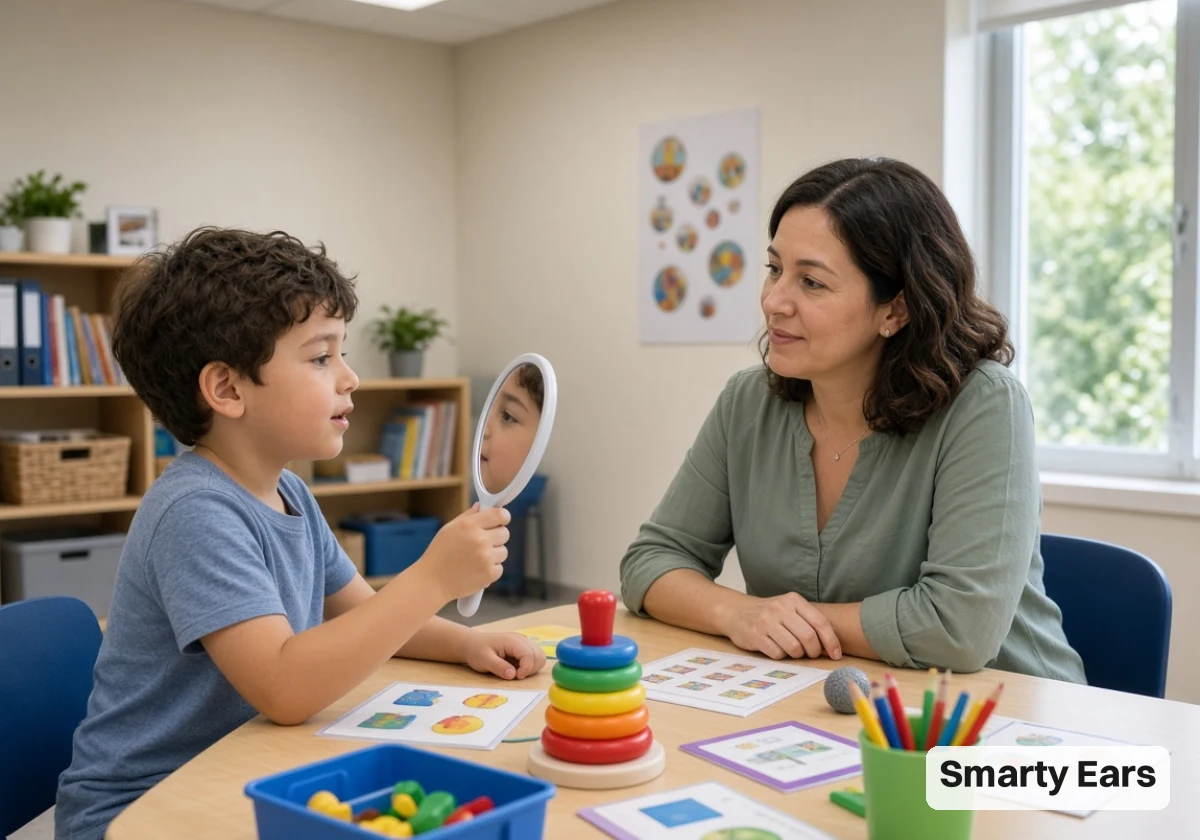
Practice starts with the sound alone, like a long “sss,” so the child can feel where the tongue sits. Seeing the movement in a mirror while hearing it helps the child connect the two.
From there, the SLP pairs the sound with vowels in syllables such as “sa,” “see,” and “so.” These pairs show how the sound links to the next movement.
Aim for quick, accurate repetitions here. Move on once the syllables sound clean without slow effort.
Single Words With the Sound at the Start, Middle, and End
Next, the child uses the sound in single words. “Sun,” “messy,” and “bus” each ask the mouth for a slightly different move. The middle or end position is often the hardest because nearby sounds pull the tongue off target. For example, many children struggle with the final “s” in words like “glass“.
Track each position separately for that reason and give the weakest one the most practice time. Otherwise, a strong start position can hide a final-sound error that resurfaces later in sentences.
Phrases and Sentences That Keep the Sound Under Light Pressure
Once words are steady, the child adds short phrases like “my sock” and then full sentences. Extra words add pressure because the child holds the sound while planning more.
Carrier phrases help at this step. Frames such as “I see a ___” keep everything predictable except the target word. Then lengthen sentences gradually, dropping back a step if errors start climbing.
Structured Conversation Through Reading Aloud, Retelling, and Games
Structured conversation gives the child room to talk while the content stays partly planned. Reading a book aloud, retelling a short story, and speech therapy games all fit this stage.
Games work well because turn-taking creates natural chances to say target words. Kids focus on winning, which pulls attention away from the mouth.
Pick articulation activities where the target sound shows up often, and give a quiet tap after an error rather than stopping play. That tap reminds the child without breaking the flow of the game.
Spontaneous Talk With Friends, Family, and Teachers
The final stage is everyday talk with friends, family, and teachers, with no adult reminders. Here, speech sound carryover shows whether the sound now comes without effort, even with a new listener or a fast-moving topic. For example, a child who says “sun” cleanly at home but slips while telling a classmate about a soccer game is still building that automatic habit.
Short listening check-ins work best at this level. Choose one routine moment, like dinner or the drive to school, and listen for the sound for about five minutes without stepping in. Once that moment sounds steady, widen the test to a phone call with a grandparent or ordering food at a restaurant.
Helping Speech Sound Carryover Happen at Home and in the Classroom
Parents and teachers hear most of a child’s speech each day, so their daily responses influence carryover the most.
In practice, SLPs often see faster progress when families keep practice short and daily. The new motor pattern needs frequent repetition to stick. You’ll probably find a gentle cue works better than a correction, since kids tune out constant reminders.
At school, teachers can help without turning class into a speech lesson. Agree on a private signal with the student, like touching an ear, to flag the sound discreetly (especially helpful for older students).
These five habits help the new sound carry over into everyday talk at home and school.
| Habit | What to Do | Why It Helps |
|---|---|---|
| Focus on One Sound | Pick one target sound at a time | The child knows exactly what to listen for |
| Use Daily Routines | Choose routines packed with target words, like setting the table | Practice fits into tasks that already happen each day |
| Praise Out Loud | Name each correct sound when you hear it | The child hears what success is like and repeats it |
| Match the Current Stage | Ask the SLP for a home practice list for the child’s stage | Home practice lines up with therapy goals |
| Share Progress Notes | Send a quick email between home and school | Parents, teachers, and the SLP all work from the same picture |
Start with two of these habits this week, then add more once they feel routine. Routine-based habits tend to pay off first, since they add practice without adding time to a busy day.
As the child gets used to them, bring in the progress notes so everyone can see where the sound holds and where it slips. Those notes give the SLP clear evidence to adjust the next goals.
Speech Therapy Progress Can Stall at the Conversation Level, and That’s Normal
Even with steady home support, progress often slows at the conversation stage. Most children do get there. ASHA cites a 2016 study by Wren and colleagues that found persistent speech sound disorders in 3.6% of 8-year-olds. The study followed thousands of UK children over several years, and ASHA’s current Practice Portal still uses it as a benchmark figure.
These signs show whether a plateau needs action.
- Structured Accuracy Holds: When a child reads sentences correctly but slips in casual chat, the sound isn’t automatic yet. This gap is normal at stage four. Ask the SLP to extend structured conversation practice before moving on.
- Self-Correction Appears: Often, a child begins catching their own errors mid-sentence before conversation becomes clean. Self-correction shows the brain is now monitoring the sound. Each catch is worth praising, because it signals carryover is close.
- No Change for Months: Flat accuracy across every stage for several months suggests the plan needs adjusting. Cues, word lists, or practice frequency may not suit the child. Book a review with the SLP to recheck goals.
A plateau at this stage rarely means your child has stopped learning, since the hardest rung naturally takes the longest. To help the SLP read it, keep short notes on when errors happen, such as the time of day, the setting, or the listener. Those patterns show whether your child needs more structured practice or adjusted goals.

Give the Sound Time to Become Automatic
This week, ask your child’s SLP which stage they’re working on and request a home practice list to match. Then pick one daily routine, like dinner or the drive to school, and listen for the target sound in real conversation.
Smarty Ears offers articulation practice tools and guidance for parents, teachers, and SLPs. Contact us to find activities that match your child’s stage and keep carryover moving.