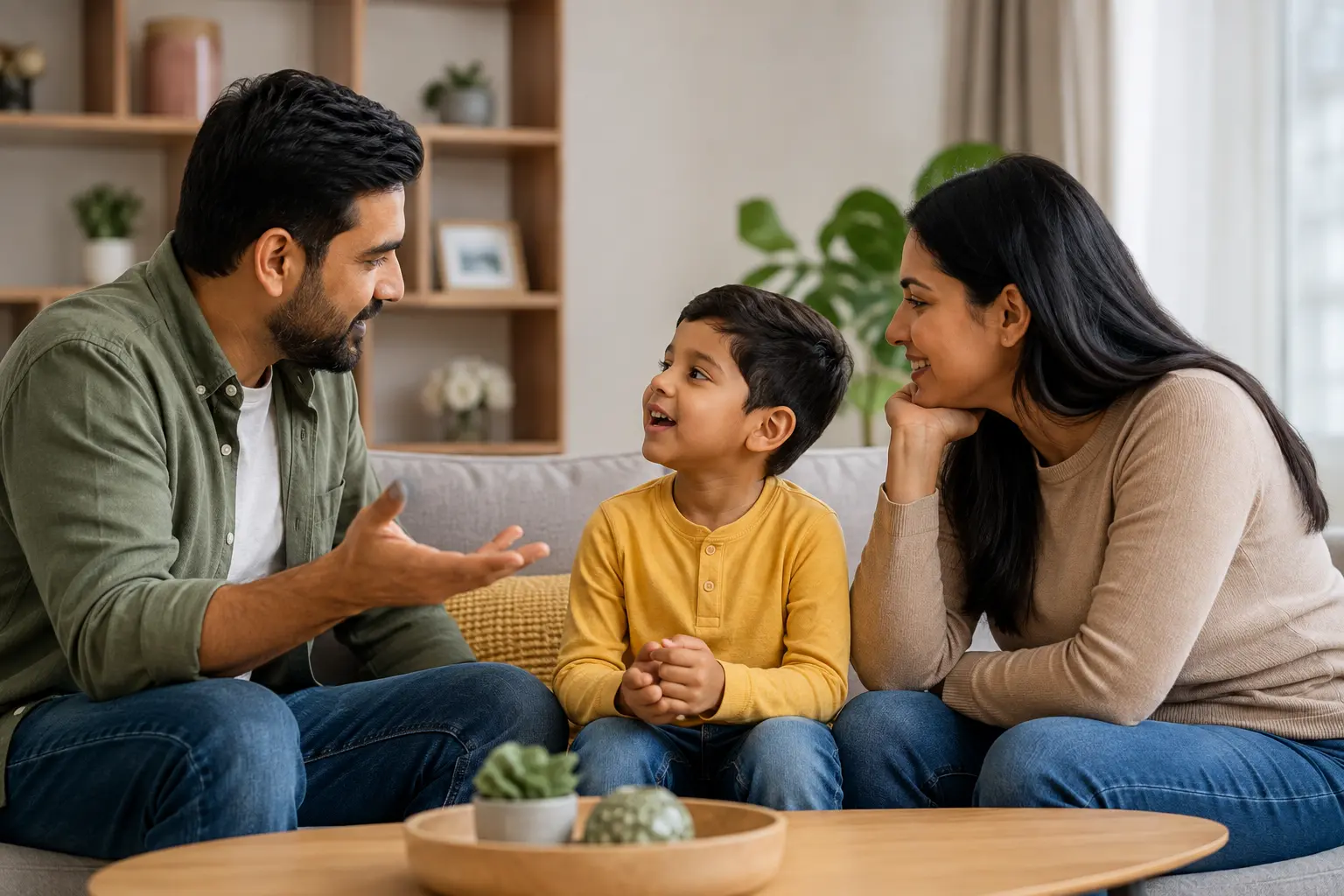
You talk to your child every day at breakfast, in the car, and during bath time. Those conversations are some of the best speech therapy activities available. They give your child repeated, low-pressure chances to hear and practice new words.
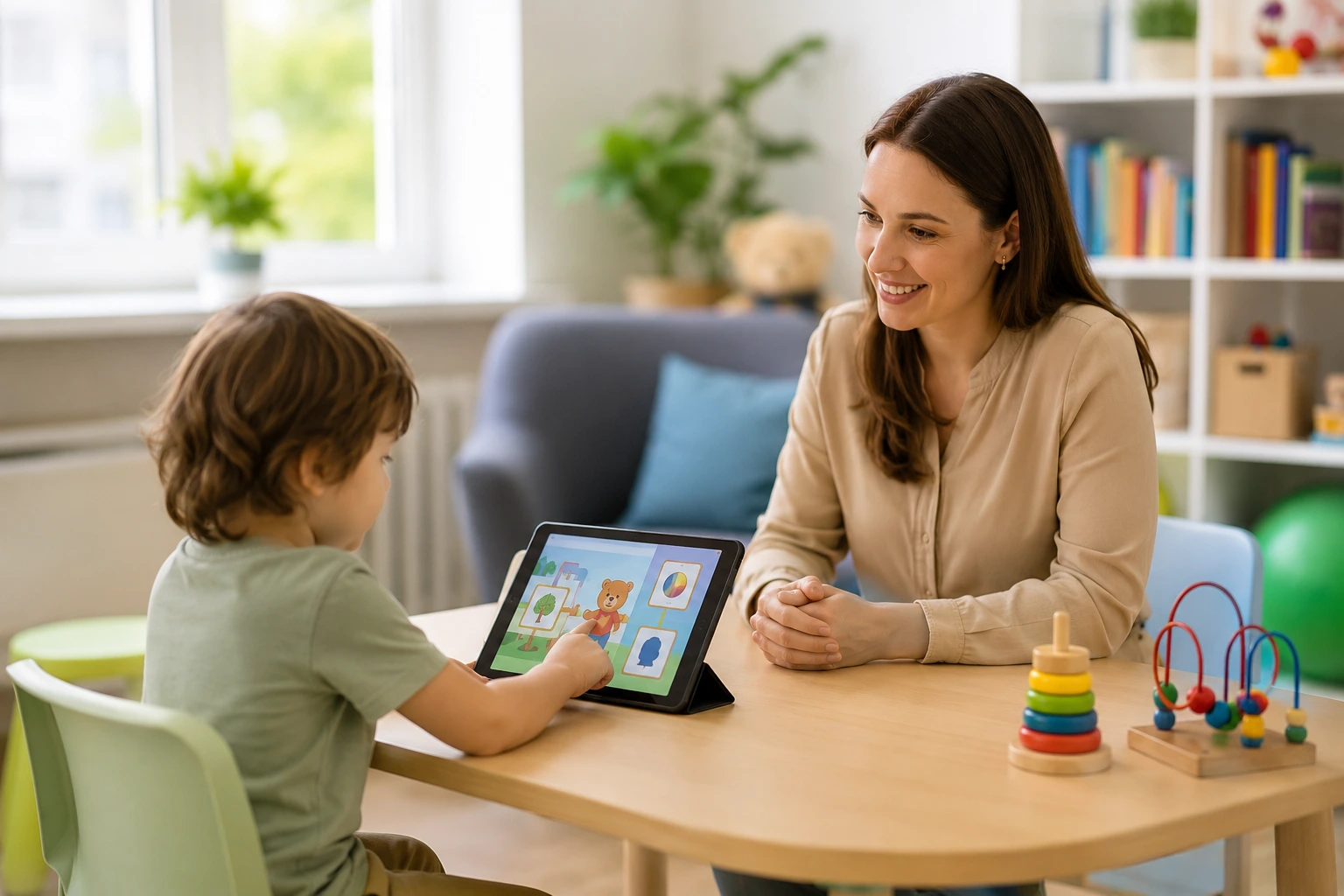
That’s exactly why we built Smarty Ears. Our speech-language pathologists created apps designed to help parents turn those everyday family conversations into structured speech practice. When you have guidance on what to focus on during these daily moments, your child learns even faster.
This guide covers how kids grow their language skills through daily routines. You’ll also find simple ways to build communication skills at home and learn when to look for signs that your child may need extra support.
Speech and Language Development Starts at the Dinner Table, Not the Classroom
Your child’s brain builds language fastest during relaxed, back-and-forth conversation with you. Every time you respond to their sounds, gestures, or words, you strengthen the neural pathways behind early speech.
Researchers who study language-rich interactions with children have found that these casual exchanges engage the brain in powerful ways. Simply put, your child’s mind treats a chat about breakfast much like a structured lesson. Children rarely repeat a new word perfectly at first, and that’s normal. In fact, research suggests they need repeated exposure in familiar settings before a word sticks.
A toddler who hears “banana” once during a flashcard drill will likely forget it by tomorrow. But hearing it at breakfast, at the store, and during a picture book helps that same word stay for good. Your dinner table, your car, and your living room give them exactly the repeated exposure they need to remember new words.
Bottom Line: Kids who grow up hearing conversation woven into their routine tend to develop language skills more quickly than those who rely only on weekly sessions. That daily back-and-forth gives them steady, low-effort practice.

Five Speech Therapy Activities Hidden in Your Daily Routine
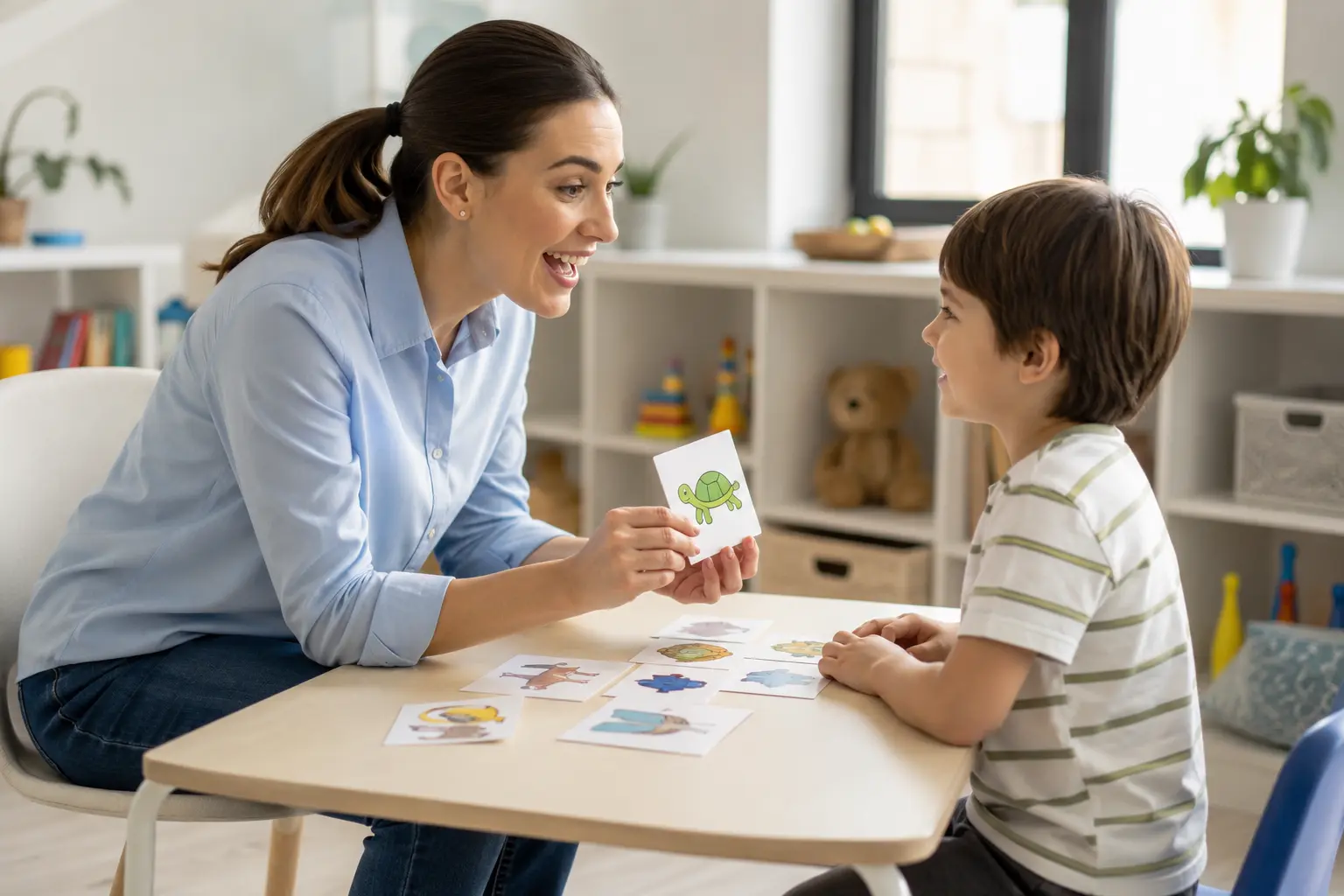
Your child doesn’t need flashcards or a formal lesson plan to practice speech. Here are five simple habits that fit right into what you’re already doing every day:
- Narrate the Morning: Talk through each step as you get your child dressed or pour their cereal. Describing actions like “now we’re putting on your red shirt” helps them connect words to real objects. The more you name things out loud, the more vocabulary they absorb.
- Ask Open Questions: Instead of “Do you want milk?” try “What do you want to drink today?” This encourages your child to form longer sentences and use more words. Open questions also give kids room to share their own ideas.
- Label the Groceries: Mealtimes are always a safe bet, but shopping trips work just as well. Point to items and say their names out loud so your child can begin building vocabulary through repetition. Ask them to find a yellow banana or a red apple to keep them engaged.
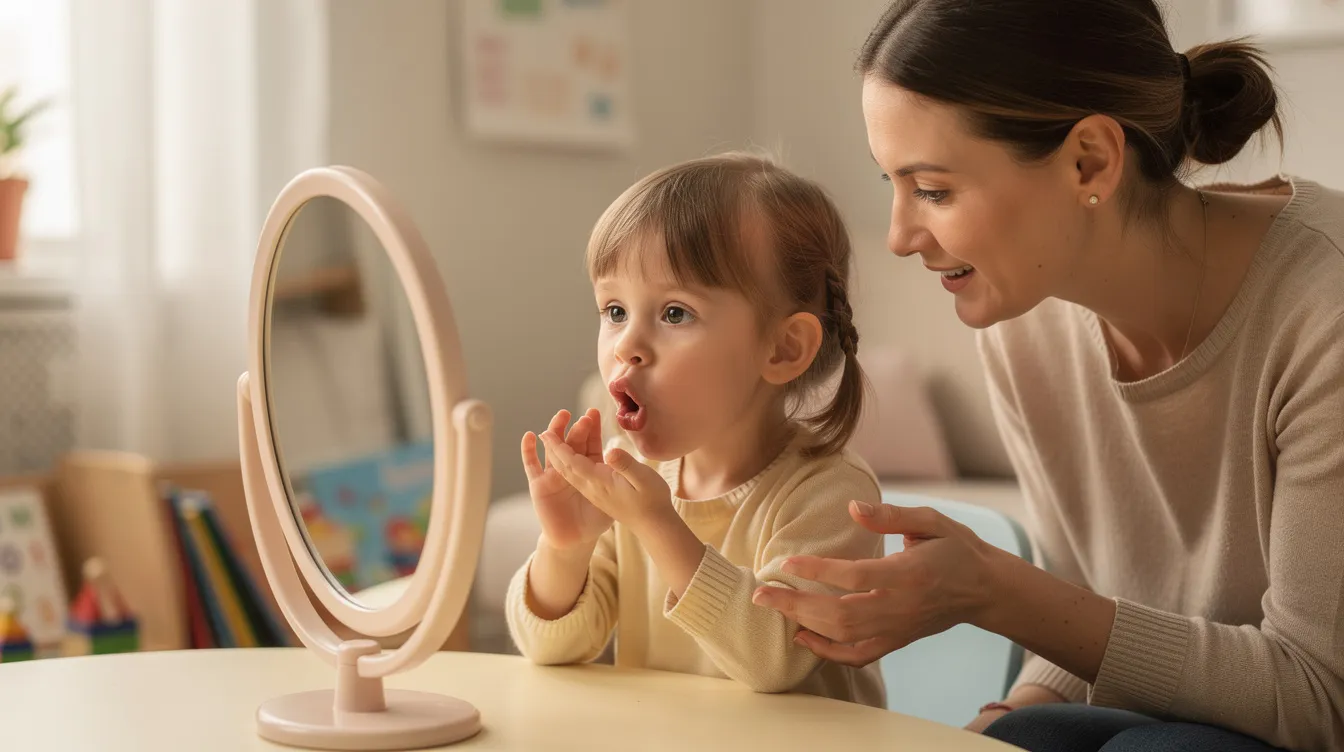
- Sing at Bath Time: Songs like “pat-a-cake” and “peek-a-boo” help your child practice speech sounds in a fun, gentle setting. The rhythm and repetition make new sounds easier to copy (kids often pick up new words right in the middle of a song).
- Chat in the Car: Describe things outside the window, like “look at that big yellow bus.” This gives your child a chance to respond with new words and ask simple questions. Car rides turn dead time into an easy language lesson.
Most parents are surprised to learn they already do one or two of these. Even five minutes of daily talking can meaningfully grow your child’s vocabulary over time.
How Playtime and Errands Build Communication Skills Without the Pressure
Home habits go a long way, but they aren’t the only place your child learns to talk. Most parents separate “practice time” from “fun time,” yet a child’s brain doesn’t make that distinction. Play and errands are two of the richest environments for building communication skills, and your child is already learning in both.
Nonverbal Cues During Play
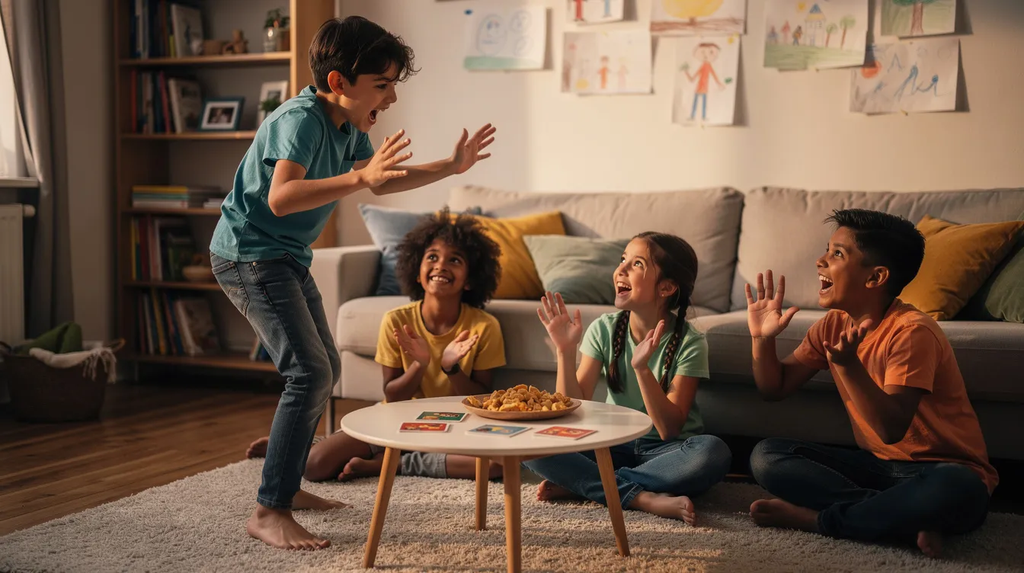
Before your child says a single word, they communicate through body language, facial expressions, and eye contact. A point at a toy, a clap after stacking blocks, or a tug on your sleeve all count as nonverbal communication.
When you respond to these gestures with words, you teach your child that communication works. That link between a gesture and your spoken response is one of the first steps in language growth.
For example, when your child points at a dog and you say, “Yes, that’s a big brown dog,” you give them a phrase to connect with something they already understand. Over time, they will begin using those same words on their own.
Active Listening on Errands
Frankly, the grocery store might be one of the best language classrooms your child will ever have. Asking your child to “grab the red box on the bottom shelf” builds active listening and vocabulary at the same time.
At Smarty Ears, we’ve found that the parents who pause and wait for a full response see the strongest gains in expressive language. Instead of finishing your child’s sentence, give them a few extra seconds. That pause lets your child process what they heard, find the right words, and respond on their own.
When Everyday Practice Isn’t Enough: Spotting a Language Disorder or Speech Disorder Early
Daily conversation helps most children, but it has limits. Some kids develop speech and language skills on a different timeline, and knowing when to ask for help can speed up your child’s development.
Here are a few signs to keep an eye on as your child grows:
| Age | What to Watch For |
| By 12 months | Does not wave bye-bye, use a special name for a parent, or understand “no” |
| By 18 months | Says fewer than three words besides “mama” or “dada”; does not follow a one-step direction |
| By 24 months | Does not combine two words or point to named pictures or body parts |
| By 36 months | Cannot hold a short back-and-forth conversation; speech is not understood most of the time |
Note: These signs are adapted from the CDC’s age-specific developmental milestones.
To be honest, catching these signs early gives your child the best chance at faster progress. If your child’s doctor or a family member raises concerns about how your little one is talking, don’t wait. Schedule an evaluation with a speech-language pathologist as soon as possible.
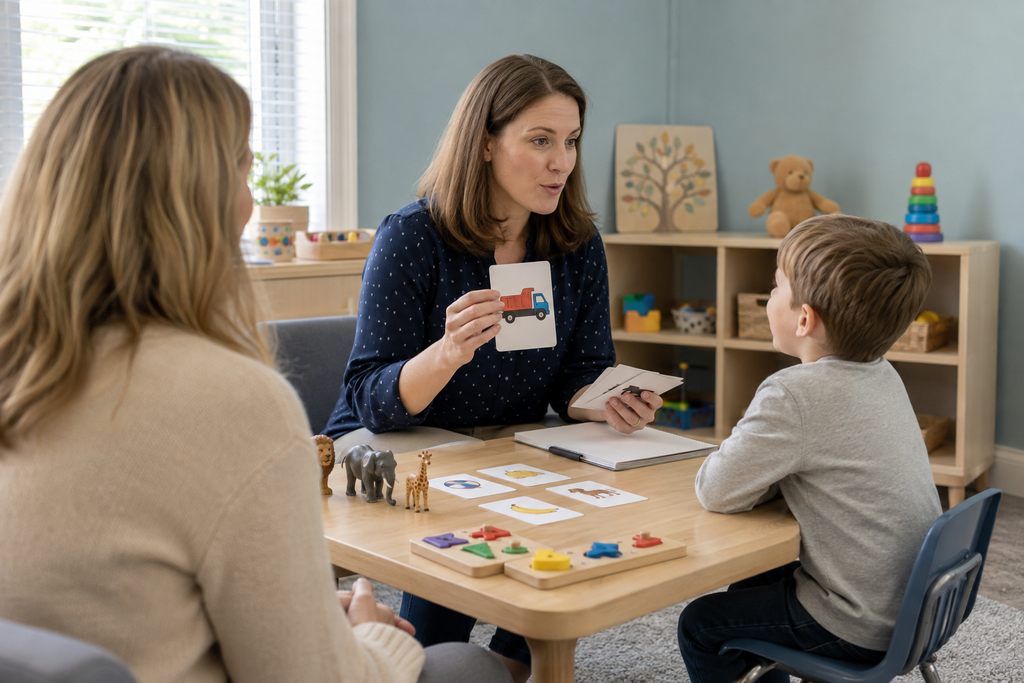
Your child’s doctor can refer you to a licensed speech-language pathologist in your area. ASHA also shares tips for supporting communication development at home if you want more ways to help between sessions.
A language or speech disorder does not mean your child won’t learn to communicate well. Early support helps them build skills faster and with less frustration.
Everyday Talk Is the Simplest Way to Grow Your Child’s Language
You don’t need a therapy room or a perfect plan to help a child build language skills. As we mentioned, conversations during meals, car rides, and errands help children hear new words, practice speech sounds, and share ideas.
Start with one routine today. You might narrate breakfast, ask open-ended questions at lunch, or describe what you see on your next errand together. Small, consistent moments of talking can add up to hundreds of new words over a year.
Your child’s speech grows one conversation at a time. Small daily habits compound into real progress over weeks and months. Start today with just one routine, and watch how naturally your child’s vocabulary and confidence expand.
Ready to build your child’s speech skills at home? Explore Smarty Ears’ speech therapy and resources designed to guide you through every stage of your child’s language development. Your child’s future communicator is waiting to emerge.