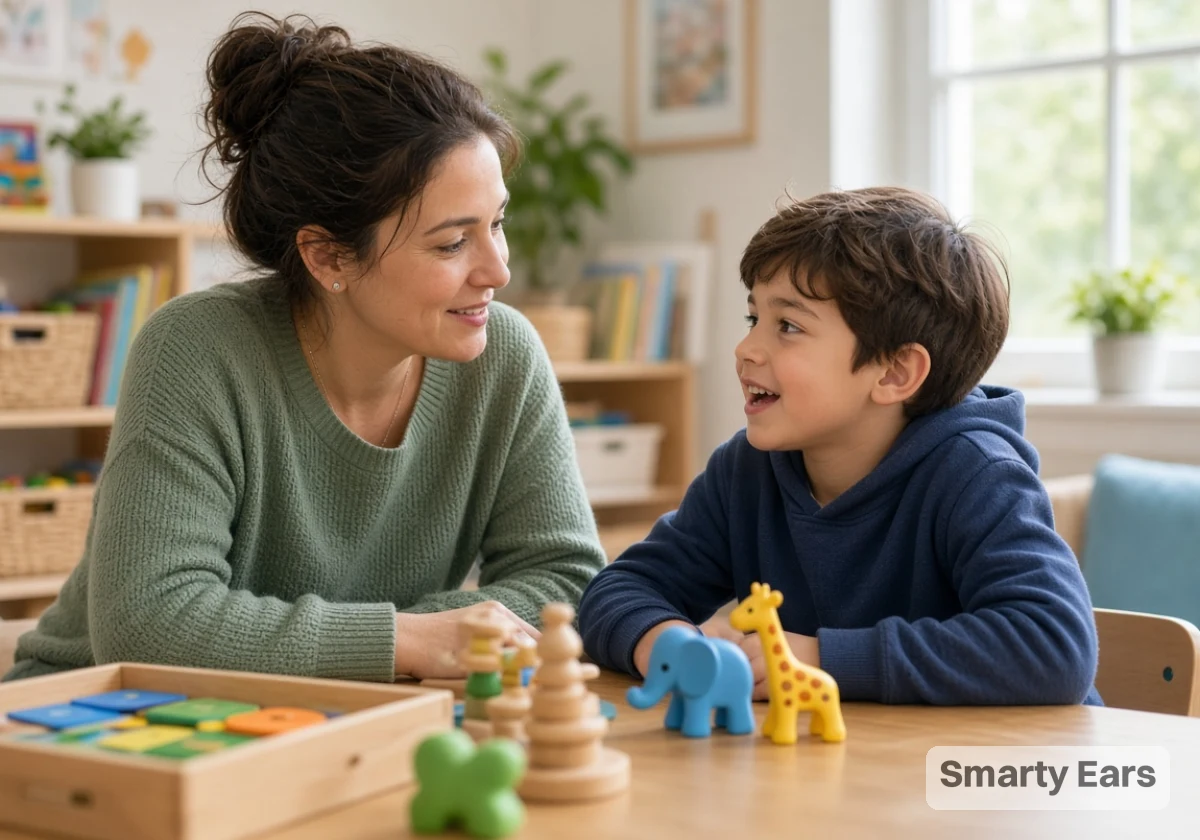
A child slow to answer questions often understands every word and just needs more time to build a reply. The pause often reflects slower information processing rather than a lack of understanding or intelligence.
The trouble is that adults often step in before a child has time to respond. At Smarty Ears, we create speech and language apps to understand parents’ queries about delayed responses.
To help answer those questions, this guide explains the five stages involved in a spoken reply and the common causes of delayed responses. It also explains how to recognise slow processing speed. Plus, we’ll cover when to seek an evaluation.
Let’s start with what goes on during that pause.
The Gap Between Hearing and Answering: What Happens Inside a Slower Reply

Every spoken answer involves several quick steps in the brain. A delay at any stage can make your child take longer to respond.
Processing speed is one part of cognitive functioning and refers to how quickly the brain can take in information, understand it, and act on it.
The five stages below explain what happens during that pause.
Hearing the Words and Working Out What Was Asked
First, your child needs to hear the question and understand what it means. Kids with receptive language difficulties, or trouble understanding spoken language, may need extra time at this stage. Long questions with several parts can make the task harder, even when they know the answer.
Try asking the same question in simpler words. If your child responds sooner, the original wording may have taken extra time to process.
Pulling the Answer Out of Memory
Once your child understands the question, they need to find the information from long-term memory. A child with slower processing speed may know the answer but need extra time to recall it. You might hear them say “um” or pause while they search for the right word.
That’s why yes-or-no questions come quickly while “why” questions stall. Notice which questions take your child longer to answer because a speech-language pathologist can use these patterns during an assessment.
Holding the Question in Mind While Building a Reply
Working memory helps your child keep the question in mind while planning an answer. A review of working memory in language disorder, citing Kail (1994) and Miller and colleagues (2001), links developmental language disorder with slower information processing.
In practice, a child may lose the question halfway through planning. Repeat it once in the same words, because new wording forces them to start over.
Turning the Thought Into Sentences
With an idea ready, your child now has to choose words, order them, and add grammar. This step leans on how language skills develop, so a younger or language-delayed child may build sentences slowly.
When we design speech practice materials, we often notice this difficulty through repeated starts, such as “The dog… the dog ran.” If your child does this, give them time to finish their sentence instead of completing it for them.
Getting the Words Out Loud
Finally, the lips, tongue, and breath have to carry the message. Some children take longer to organise these movements, especially those with speech sound difficulties or stuttering. They may pause before saying a word or struggle to get started.
Watch for signs such as tight lips, repeated sounds, or difficulty starting a word. These clues may point to a speech difficulty rather than slow information processing.
What Causes a Child to Be Slow to Answer Questions?
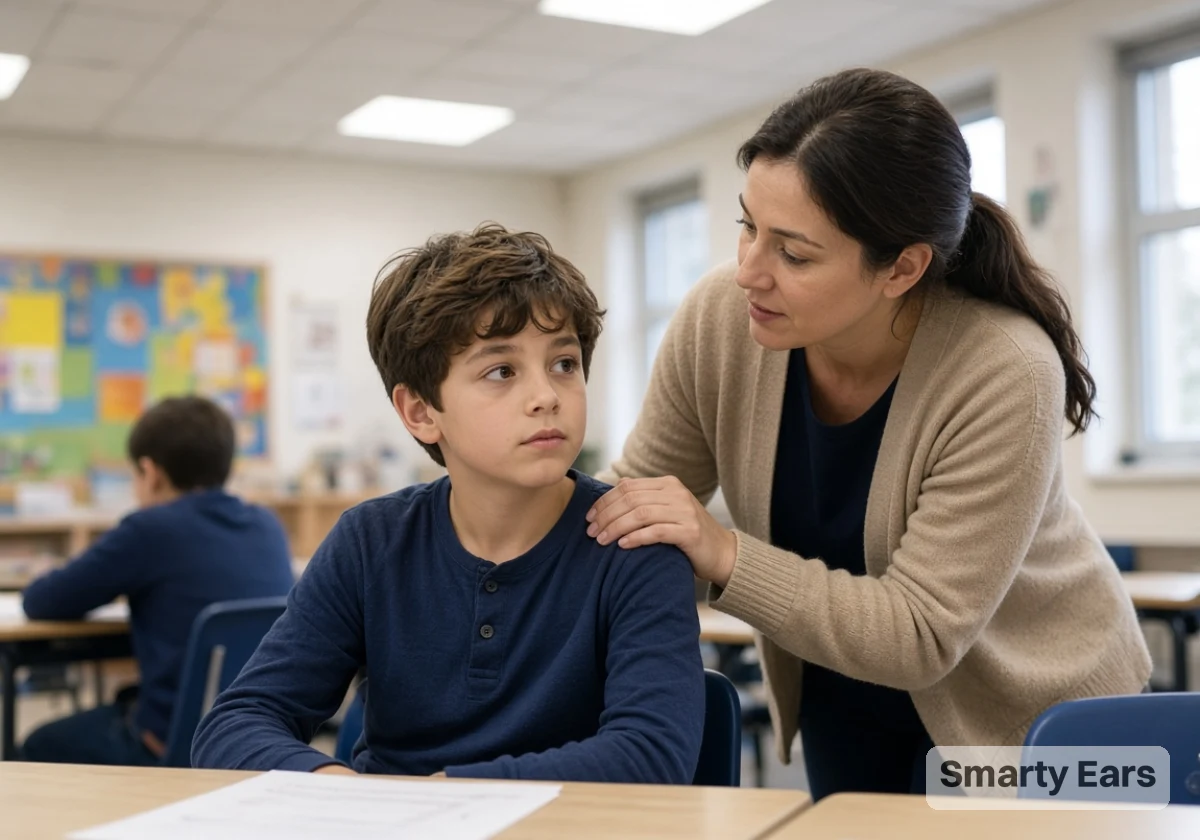
Children may take longer to answer for several reasons. Slow processing speed, ADHD (Attention Deficit Hyperactivity Disorder), language difficulties, and anxiety can all affect how quickly a child responds. Below, we’ve explained four of the most common causes:
- Slow Processing Speed: Some children move through reading, listening, and reasoning at a slower pace. This often sits alongside other learning differences. Ask the teacher how your child manages timed and untimed tasks to see where they need extra time.
- ADHD and Attention: ADHD affects executive functioning, so a child may lose attention to the task partway through a question. A missed word means they need a repeat before answering. Get eye contact first, then ask.
- Language Disorders and Delays: Because language skills develop unevenly, some kids struggle to understand questions or phrase replies. These delays affect both school and social situations. A speech-language pathologist can test both skills.
- Anxiety and Pressure: Worried about being wrong, an anxious child may freeze even when they know the answer. The pressure grows in front of peers. Try asking questions during relaxed moments, like car rides.
These causes can look similar, so pay attention to when and where your child struggles to respond. Notice if the pauses happen mainly in social settings, during schoolwork or across everyday conversations. These patterns can help a teacher or specialist identify what kind of support your child needs.
Signs of Slow Processing Speed Look Different From Ordinary Thinking Time
Every child pauses sometimes, so the useful question is how often and in which settings. Slow processing speed in children may affect other daily tasks, such as following instructions, completing chores and keeping up with schoolwork. Compare your child’s behaviour with the examples in this table.
| Behavior | Ordinary Thinking Time | Possible Slow Processing | What to Try |
|---|---|---|---|
| Answering questions | Pauses on hard questions only | Pauses on simple ones too | Time a few easy questions |
| Following directions | Follows two steps | Finishes only the first step | Give one step at a time |
| Schoolwork | Finishes with the class | Can’t keep up or complete tasks | Ask about extended time |
| Conversations | Keeps up with friends | Joins after the topic changes | Practice turn-taking at home |
For a child slow to answer questions, pauses on simple questions may point to processing difficulties rather than question difficulty. Parents and teachers should compare their observations across home and school.
Students with slower processing speed often struggle with taking notes and finishing tests on time, so the teacher may have already seen the pattern.
Supporting Children Who Need Longer to Respond at Home and in Class

The simplest change is to slow the pace of questions and give your child enough time to respond. A few small adjustments at home and in class can help.
A 2026 Central Michigan University post on classroom wait time reports that instructors wait roughly one second after asking a question. Children who need several seconds get little time to prepare an answer.
From there, small habits can help. Speech-language pathologists often coach adults to count silently before stepping in.
Visual cues help too because a child with difficulty processing spoken words may handle visual processing differently than verbal processing.
If you’re ready to start, try these practical strategies:
- Give Your Child Time to Think: Count silently to 10 after asking a question. Resist the urge to repeat or rephrase it before your child responds. A little silence gives them room to organise their thoughts.
- Keep Questions Separate: Avoid asking several things at once, such as what your child did, who they played with and how they felt. Each question requires a separate answer. Let one conversation point finish before introducing another.
- Prepare Them for Upcoming Questions: A simple reminder like “I’ll ask you about recess next” gives your child time to think about the topic. Use similar reminders before discussions about school, family events or daily activities.
- Use Visual Checklists: Spoken instructions may be harder to follow when a task involves several steps. Write each instruction on a separate line so your child can refer to it. This also helps them keep track of unfinished tasks.
- Discuss Extra Time at School: Your child may need longer to complete tests and homework. In these cases, request extra time for both tasks. You can also explore suitable classroom adjustments with the teacher.
Keep track of your child’s responses over the next few weeks. Note which strategies help them answer with less difficulty and use those consistently. Avoid changing several habits at once, so you can see which ones help.
When to Ask for an Evaluation and What to Do Next
Now you know why some children need extra time to answer questions, even when they understand what’s being asked. Slow responses may relate to processing speed, language skills, attention or anxiety. Patience and the right support help children express their thoughts without pressure.
Start by noting when your child struggles to respond and share those observations with their teacher. If the delays affect conversations or schoolwork, seek an evaluation from a speech-language pathologist. The findings can guide support at home and in class.
As mentioned earlier, Smarty Ears creates speech and language apps for parents and caregivers to use at home. Contact our team to find tools that support your child’s communication practice.